

If I say, 'I forgive you,' I have implicitly said you have done something wrong to me. But what forgiveness is at its heart is both saying that justice has been violated and not letting that violation count against the offender.
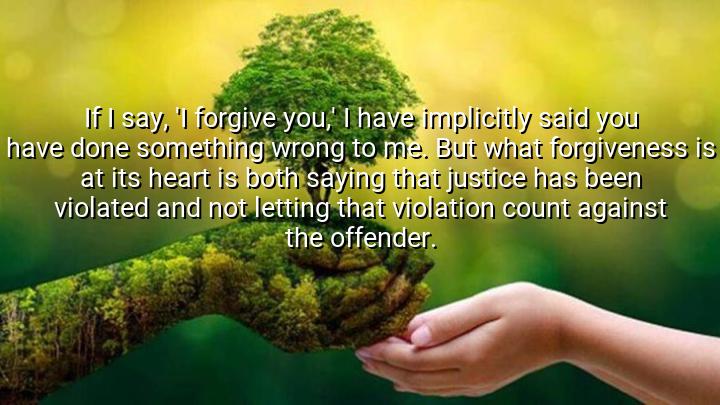




Miroslav Volf’s quote, "If I say, 'I forgive you,' I have implicitly said you have done something wrong to me. But what forgiveness is at its heart is both saying that justice has been violated and not letting that violation count against the offender," delves into the complexity of forgiveness and its deeper meanings. Volf acknowledges that when we forgive, we are, in essence, recognizing that someone has wronged us. However, true forgiveness goes beyond simply acknowledging the wrongdoing; it involves choosing not to let that violation affect our relationship with the offender moving forward.
Volf’s point is that forgiveness is not about ignoring the violation or pretending it didn’t happen. Instead, it’s about recognizing that justice has been violated but deciding not to hold it against the person who committed the offense. This distinction is important because it shows that forgiveness doesn’t erase the reality of harm or injustice; it instead involves a conscious decision to release any ongoing negative feelings or consequences tied to that wrongdoing.
The quote also emphasizes the moral strength and spiritual depth required for true forgiveness. It’s not an easy task to recognize the injustice done to us and still choose to forgive. Forgiveness requires us to balance a sense of justice with a commitment to grace and mercy. It involves a shift in how we view the offender—not as someone deserving of punishment, but as someone worthy of compassion and reconciliation.
Ultimately, Volf’s reflection on forgiveness challenges us to understand it as an active and conscious choice. It’s not about erasing the past but choosing not to let the offense define the future. By doing so, we open the possibility for healing, restoration, and growth, both for ourselves and for those who have wronged us.

AAdministratorAdministrator
Welcome, honored guests. Please leave a comment, we will respond soon