

If I get to the end of my life, if I die, and I find out religion is one big lie, I still won't regret it because it's helped me to live a better life, to be a better person, to care about people, to believe in forgiveness, to believe in hope.
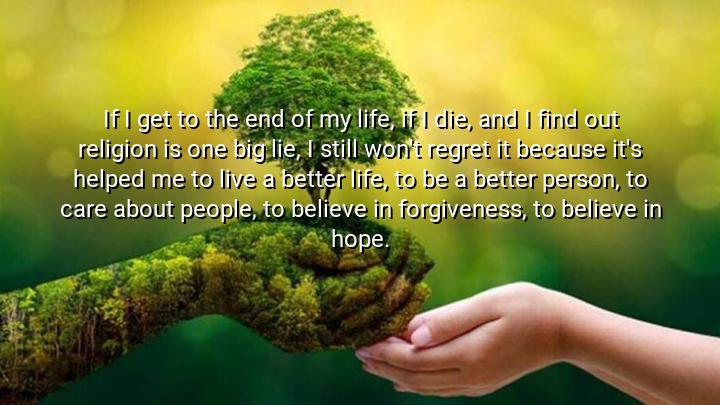




Elizabeth Smart’s quote reflects her deeply personal perspective on the role of religion in her life. She acknowledges that even if, in the end, she discovers that religion is untrue, she would have no regrets because it has had a positive impact on her life. The quote highlights how faith—regardless of its ultimate truth—has shaped her values and actions, making her a better person. For Smart, religion has provided a framework for living that encourages compassion, forgiveness, and hope.
The quote also suggests that religion serves as a guiding force, helping individuals cultivate positive traits such as kindness and empathy toward others. By embracing religious principles, Smart believes that she has become a more caring and considerate individual. It demonstrates how religion can serve as a moral compass, influencing a person’s behavior and interactions with others in meaningful ways.
Additionally, Smart mentions the belief in forgiveness and hope as essential aspects of her life. These principles are often central to many religious teachings, and for her, they have been sources of emotional strength and resilience. The idea of forgiving others and maintaining hope, even in difficult times, are qualities that have helped her navigate challenges and live with a sense of peace.
Ultimately, Smart’s quote emphasizes the value of religion as a tool for personal growth and living a fulfilling life. Even if she were to learn that the religious beliefs she holds might not be based on objective truth, the positive impact it has had on her character and well-being would still make it worthwhile.

AAdministratorAdministrator
Welcome, honored guests. Please leave a comment, we will respond soon