

If bringing up the next generation is important, why aren't they the best qualified, the best paid? Why aren't we as concerned about their career progression as we are about those who work in the education or health services?
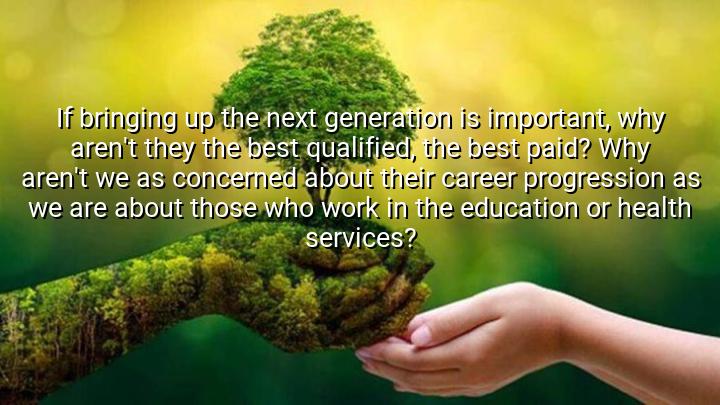




Estelle Morris’ quote raises a critical question about the value placed on those who are responsible for raising the next generation. She points out the apparent contradiction between the importance of this role and the fact that parents, particularly those involved in raising children, are often not the best qualified or best paid for the job. Morris implies that society places a higher value on education and health services professionals, often overlooking the fundamental work of caregiving and child-rearing, which also significantly shapes the future of society.
Morris emphasizes that if raising the next generation is truly seen as a priority, then it follows that those responsible for it should receive more recognition, support, and financial compensation. She calls attention to the gap between the financial and career advancement opportunities available in sectors like education and health and those available to those raising children. This suggests that the societal value of childcare and parenting doesn't match the level of importance these roles hold for the future of society.
Her question about why we are not as concerned about the career progression of those raising children as we are about those in other professions is a critique of how society defines and rewards labor. Morris seems to be calling for a broader perspective on the roles that parents and caregivers play, advocating for a shift in how we view and compensate these critical roles. By suggesting that these roles should be treated with the same respect and investment as health or education, she points to the need for policy and cultural changes.
Estelle Morris, a former British politician and Secretary of State for Education, has long been involved in discussions about education and social policies. This quote likely reflects her concerns about the undervaluation of roles that directly contribute to the development and well-being of future generations. Her statement calls for a reevaluation of how we approach parenting and caregiving within the larger framework of societal progress.

AAdministratorAdministrator
Welcome, honored guests. Please leave a comment, we will respond soon