

I wish I could throw off the thoughts which poison my happiness, but I take a kind of pleasure in indulging them.
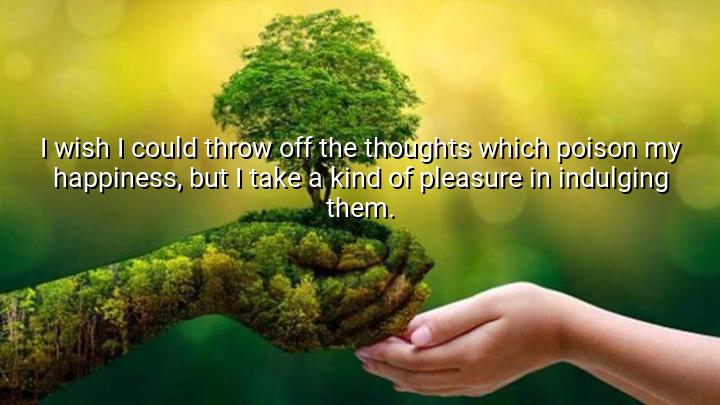




The quote "I wish I could throw off the thoughts which poison my happiness, but I take a kind of pleasure in indulging them" by Frédéric Chopin reflects the internal struggle between self-awareness and self-sabotage. Chopin expresses a desire to rid himself of negative or destructive thoughts that prevent him from experiencing true happiness. However, he also admits that, despite knowing these thoughts are harmful, he finds a certain comfort or pleasure in dwelling on them, illustrating the complex relationship people sometimes have with their own emotions.
This quote reveals the paradox of human nature—while we often seek happiness, we can become entangled in negative thinking or self-destructive patterns. The idea of "poisoning" happiness implies that these thoughts don’t just hinder our joy; they actively make it difficult to experience peace or fulfillment. However, the pleasure Chopin refers to suggests that there is an emotional or psychological reward in continuing to indulge in these toxic thoughts, which can create a cycle of emotional conflict.
Chopin, a famous composer and pianist, was known for his deeply emotional and often melancholic music, which reflected his personal struggles with health and mental well-being. His internal battles with his thoughts may have been influenced by the anxiety, loneliness, and physical ailments he faced throughout his life. The quote sheds light on the emotional depth and complexity behind his music, where themes of longing and inner turmoil are prevalent.
Ultimately, the quote speaks to the universal human experience of struggling with negative thoughts despite knowing they hinder personal happiness. It reminds us of the delicate balance between being aware of what we need to let go of and the difficulty of breaking free from patterns that can bring us temporary comfort, even if they ultimately harm us. Chopin’s words capture the tension many people feel between wanting to be free of negativity and finding themselves caught in its grip.

AAdministratorAdministrator
Welcome, honored guests. Please leave a comment, we will respond soon