

I think the best of us comes when we are working together collectively. And it doesn't mean that we can't disagree. We've got to learn, as Dad taught us, to disagree without being disagreeable.
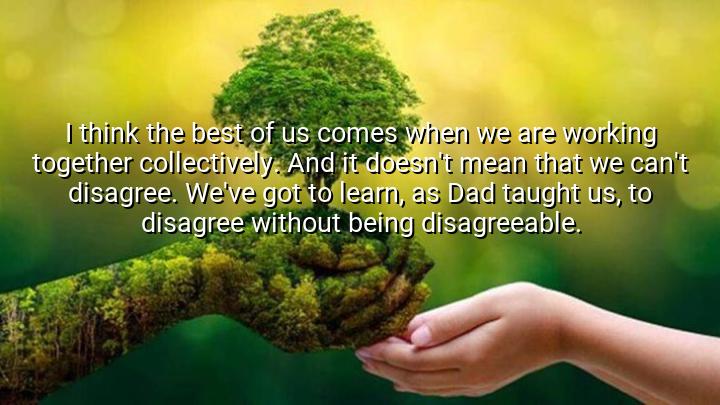




The quote "I think the best of us comes when we are working together collectively. And it doesn't mean that we can't disagree. We've got to learn, as Dad taught us, to disagree without being disagreeable" by Martin Luther King III emphasizes the power of collaboration and respectful dialogue in achieving the best outcomes. King reflects on how working together as a unified group brings out the best qualities in people, but acknowledges that disagreement is a natural part of any process. What matters, he suggests, is the ability to navigate conflict without letting it turn into hostility or personal attacks.
The phrase "to disagree without being disagreeable" is a key lesson from his father, Martin Luther King Jr., who was known for his commitment to nonviolence and respectful discourse even in the face of profound opposition. This principle encourages open and honest debate while maintaining a sense of dignity and mutual respect. King III is highlighting that conflict doesn’t have to lead to divisiveness or animosity if it is handled constructively.
The quote underscores the importance of working together even when opinions differ. In today’s often polarized society, King III’s message serves as a reminder that the greatest progress is made when people can come together, share differing views, and still maintain a spirit of cooperation. His father’s teachings about disagreement are as relevant today as they were during the Civil Rights Movement, promoting civil discourse and a commitment to finding common ground.
In essence, Martin Luther King III's quote reflects his father’s legacy of nonviolent communication and collaboration, suggesting that while differences will arise, it is how we address them that defines our collective success. The quote encourages people to engage in dialogue and cooperation while embracing the diversity of thought and opinion that is essential for progress.

AAdministratorAdministrator
Welcome, honored guests. Please leave a comment, we will respond soon