

I shall not die of a cold. I shall die of having lived.
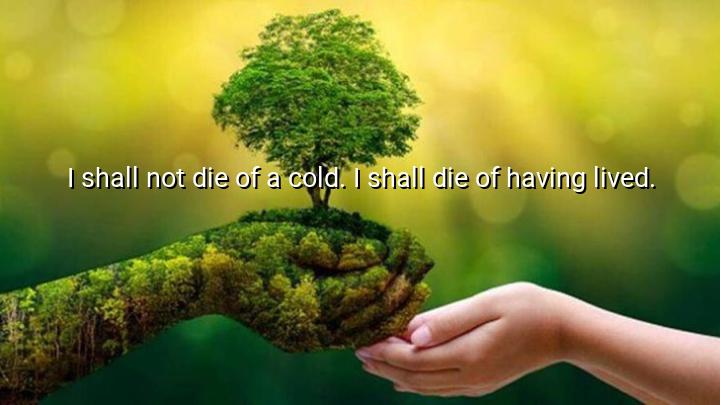




The quote "I shall not die of a cold. I shall die of having lived" by Willa Cather reflects a profound perspective on life and death. Cather implies that death will not come from something as trivial or passive as illness or cold, but from the very act of having lived fully and intensely. This statement suggests a rejection of a life lived in fear or avoidance of risk, instead embracing a life of engagement, experience, and passion, where the culmination of a rich and meaningful life is what ultimately leads to death.
The origin of this quote is rooted in Cather’s own worldview, shaped by her experiences as a writer in the early 20th century. Known for her works exploring the lives of individuals on the American frontier, Cather often focused on themes of resilience, individualism, and the human spirit. This quote aligns with her belief that living fully and boldly is far more significant than merely surviving. It reflects her emphasis on quality of life rather than just the duration of it.
Cather’s words also speak to the idea of accepting death as an inevitable outcome of living fully. By stating that she will "die of having lived," she highlights that death is not something to be feared but an inescapable end to a life well-lived. The quote encourages a mindset that embraces experience, adventure, and the richness of life, rather than fearing its end.
In essence, this quote celebrates a life lived with courage, joy, and purpose. It reminds us that death is a natural part of the cycle of life, and that it’s the depth and vitality of how we live that ultimately defines us, not the mere avoidance of harm or hardship. Cather’s reflection is a call to live fully, embracing both the highs and lows, knowing that in the end, it is the living itself that matters most.

AAdministratorAdministrator
Welcome, honored guests. Please leave a comment, we will respond soon