

I learned that courage was not the absence of fear, but the triumph over it. The brave man is not he who does not feel afraid, but he who conquers that fear.
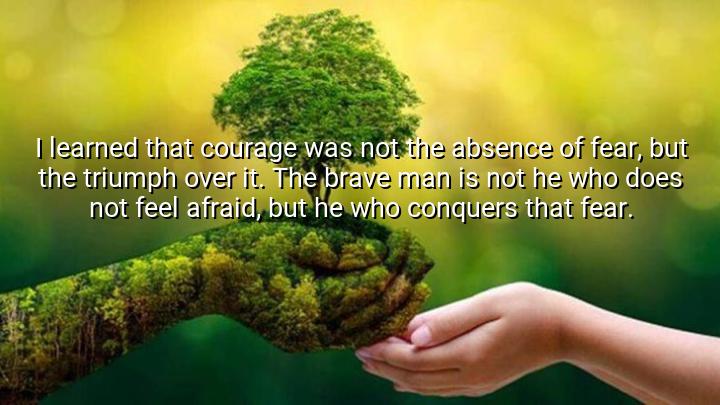




The quote "I learned that courage was not the absence of fear, but the triumph over it. The brave man is not he who does not feel afraid, but he who conquers that fear." is attributed to Nelson Mandela, the iconic South African leader, anti-apartheid revolutionary, and Nobel Peace Prize laureate. This powerful statement comes from his reflections on leadership and personal strength, especially during his 27 years of imprisonment under South Africa's apartheid regime. Mandela’s life was a testament to enduring hardship with dignity, and this quote reveals his deep understanding of courage as a moral and emotional victory.
At its core, the quote redefines bravery. It dismisses the idea that truly courageous people are free from fear, and instead affirms that courage is the act of moving forward in spite of it. Mandela explains that feeling fear is natural and human, but what distinguishes a brave person is the ability to act wisely and resolutely regardless of that fear. In doing so, he gives courage a broader and more inclusive definition—one accessible to anyone willing to persevere.
This philosophy was central to Mandela’s leadership and resistance against injustice. Facing intimidation, violence, and isolation, he did not let fear silence him or derail his commitment to equality and freedom. His words reflect a deep inner strength and a belief that overcoming fear, not avoiding it, is what empowers people to create real and lasting change.
Ultimately, Mandela’s quote is both inspirational and transformative. It encourages individuals to accept their fears rather than feel ashamed of them and to recognize that the act of confronting fear is itself an expression of greatness. In doing so, it offers a path to resilience, reminding us that even the most admired heroes once felt fear—they simply chose not to be ruled by it.

AAdministratorAdministrator
Welcome, honored guests. Please leave a comment, we will respond soon