

I have no faith in human perfectability. I think that human exertion will have no appreciable effect upon humanity. Man is now only more active - not more happy - nor more wise, than he was 6000 years ago.
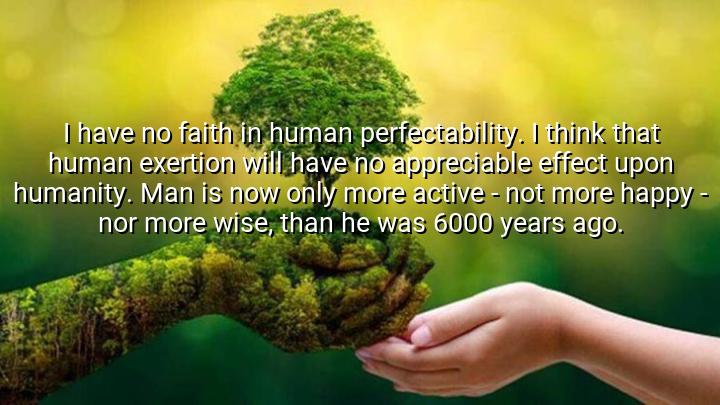




The quote "I have no faith in human perfectability. I think that human exertion will have no appreciable effect upon humanity. Man is now only more active - not more happy - nor more wise, than he was 6000 years ago" by Edgar Allan Poe expresses deep skepticism about human progress. Poe argues that despite technological and societal advancements, humanity has not become truly happier or wiser over time. He believed that human nature remained fundamentally flawed and that efforts to achieve a state of moral or intellectual perfectability were ultimately in vain.
The origin of this quote comes from Poe's broader philosophical reflections, which often carried a tone of pessimism and realism about life. Known primarily for his poetry and dark tales, Edgar Allan Poe was also a keen observer of society. He doubted that progress in science, industry, or politics could significantly change the core aspects of humanity, which he saw as subject to the same weaknesses and desires that had existed for thousands of years.
This statement also serves as a critique of the 19th-century optimism surrounding human perfectability, an idea embraced by many thinkers of Poe's time. Philosophers and reformers believed humanity could continually improve itself through reason, education, and moral reform. Poe, however, believed that while humans might become more active or productive, these efforts did not necessarily translate into greater wisdom or happiness.
Ultimately, Poe’s quote reflects a timeless debate about the nature of progress. It challenges the assumption that material or societal advancement automatically leads to inner fulfillment or enlightenment. By expressing doubt in humanity’s ability to fundamentally improve itself, Poe encourages a more cautious and realistic view of what human exertion can truly achieve.

AAdministratorAdministrator
Welcome, honored guests. Please leave a comment, we will respond soon