

I feel a distaste for hunting, first because of a kind of Buddhist respect for the unity and sacredness of all life, and also because the pursuit of a hare or chamois strikes me as a kind of 'escape of energy,' that is, the expenditure of our effort in an illusory end, one devoid of profit.
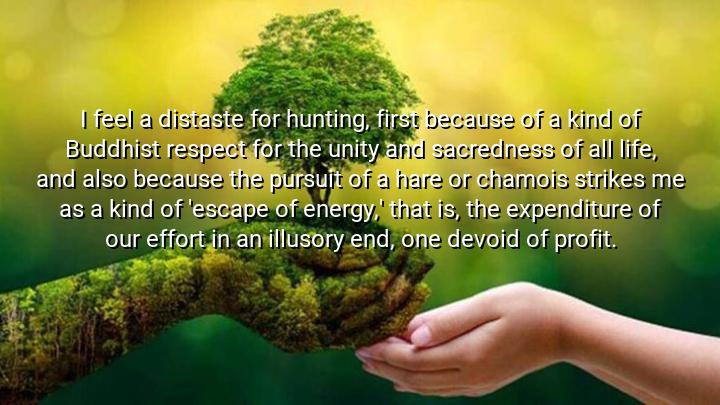




The quote, “I feel a distaste for hunting, first because of a kind of Buddhist respect for the unity and sacredness of all life, and also because the pursuit of a hare or chamois strikes me as a kind of 'escape of energy,' that is, the expenditure of our effort in an illusory end, one devoid of profit”, by Pierre Teilhard de Chardin, reflects his philosophical and ethical views on life, energy, and purpose. Teilhard de Chardin expresses a moral objection to hunting, rooted in his belief in the sacredness of all living beings, showing a deep respect for life that resonates with Buddhist principles of interconnectedness.
Originating from the writings of Teilhard de Chardin, a French Jesuit priest, philosopher, and paleontologist, the quote combines reflections on spiritual ethics with practical reasoning. He criticizes hunting not only on moral grounds but also on the basis that it represents a waste of energy, an effort directed toward an illusory or unproductive goal. This perspective reflects his broader philosophy of purposeful action, emphasizing that human efforts should contribute meaningfully to growth, progress, or higher aims rather than indulging in trivial pursuits.
The quote also illustrates Teilhard de Chardin’s vision of the unity of life and the importance of aligning human behavior with cosmic or spiritual order. By valuing all life forms and condemning pointless exertion, he promotes a worldview in which actions are measured by ethical and practical significance, not just by personal satisfaction or entertainment. The “escape of energy” metaphor highlights the futility of certain human endeavors when they lack true purpose or benefit.
Ultimately, the quote underscores a blend of spiritual ethics, ecological awareness, and philosophical reflection. Teilhard de Chardin invites readers to consider how their actions respect life and whether they contribute to meaningful ends, encouraging a thoughtful approach to both moral responsibility and the use of human energy in life.
If you like, I can also make a simpler, concise version ideal for study notes.

AAdministratorAdministrator
Welcome, honored guests. Please leave a comment, we will respond soon