

I don't see this planet being... they're talking about how they're turning around the environmental problems here, but I think it's already too late.
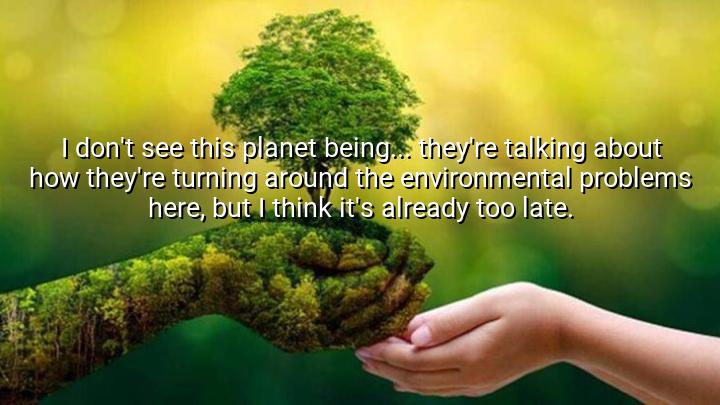




In this quote, Ace Frehley expresses a pessimistic view about the state of the planet and its ability to recover from ongoing environmental problems. He acknowledges that there are efforts being made to address these issues, but he believes that the damage may already be so extensive that it’s too late to effectively reverse the harm. Frehley’s statement reflects a sense of urgency and disillusionment regarding the current state of environmental action and the long-term outlook for the planet.
Frehley’s view suggests a deep concern that environmental degradation has reached a point where mitigation efforts, such as reducing pollution or addressing climate change, may not be enough to prevent irreversible damage. He implies that, despite the discussions and initiatives aimed at turning around the situation, the cumulative impact of years of environmental neglect and exploitation may already be too severe to fully recover from. This reflects a fatalistic perspective on environmental conservation.
The quote also highlights the broader debate about the effectiveness and timeliness of current environmental policies. While many experts and activists argue that it is not too late to take action, Frehley’s comment brings attention to the frustration felt by some who believe that the window of opportunity for significant change has already passed. This can be seen as a reflection of the tension between optimism and realism in environmental discussions.
Ultimately, Ace Frehley’s statement conveys a cynical perspective on the fight against environmental degradation, stressing the urgency of taking action before the damage becomes irreversible. His belief that it may be too late to save the planet calls for a deeper reflection on the effectiveness and urgency of environmental efforts, urging both individuals and governments to act more decisively.

AAdministratorAdministrator
Welcome, honored guests. Please leave a comment, we will respond soon