

I don't like people who have never fallen or stumbled. Their virtue is lifeless and it isn't of much value. Life hasn't revealed its beauty to them.
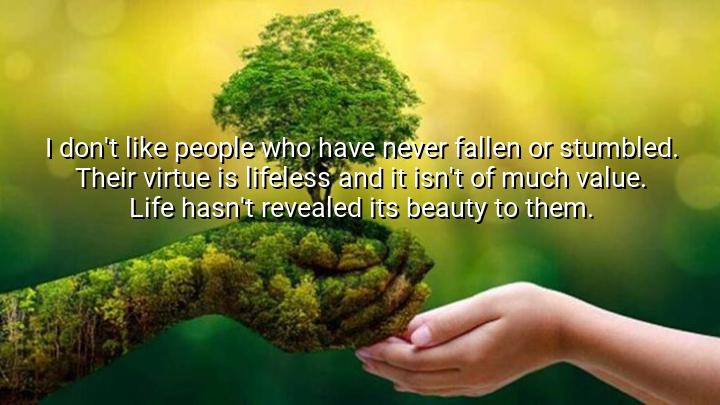




The quote "I don't like people who have never fallen or stumbled. Their virtue is lifeless and it isn't of much value. Life hasn't revealed its beauty to them" by Boris Pasternak reflects the idea that true virtue and wisdom are born out of struggle and failure. Pasternak, a renowned Russian writer and poet, suggests that individuals who have never experienced setbacks or hardships lack the depth that comes from overcoming adversity. For him, the process of falling and stumbling is essential for personal growth and understanding the complexity and beauty of life.
Pasternak emphasizes that virtue that comes too easily or without any hardship is shallow and lacking in substance. His view aligns with the belief that real character is forged through challenges and the ability to rise again after failure. Those who have faced difficulties in life are more likely to appreciate the beauty of human resilience, as they have firsthand experience of how strength emerges from moments of vulnerability.
The quote also speaks to the idea that life’s beauty is often revealed in the struggle. When individuals go through pain, setbacks, or failures, they gain a deeper appreciation for the fleeting moments of joy and success. Without the contrast of hardship, the beauty of life remains unnoticed, as it is only through experiencing suffering and resilience that one can truly value the more positive aspects of existence.
Ultimately, Pasternak’s words encourage a shift in how we view failure and adversity. Rather than seeing them as negative experiences, he presents them as essential to the human experience—tools that help reveal life’s true beauty and deepen our understanding of virtue and strength.

AAdministratorAdministrator
Welcome, honored guests. Please leave a comment, we will respond soon