

Art has two constant, two unending concerns: It always meditates on death and thus always creates life. All great, genuine art resembles and continues the Revelation of St John.
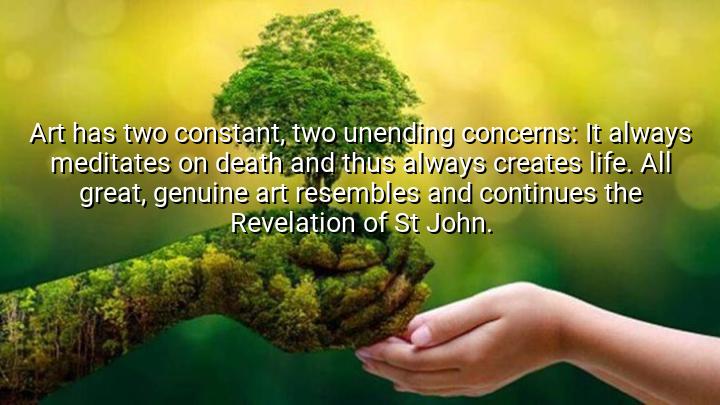




In the quote "Art has two constant, two unending concerns: It always meditates on death and thus always creates life. All great, genuine art resembles and continues the Revelation of St John," Boris Pasternak, the Russian poet and novelist best known for his novel Doctor Zhivago, reflects on the profound relationship between art, life, and death. Pasternak suggests that art is constantly engaged with the themes of mortality and the inevitability of death, yet through this exploration, it also brings about a sense of life. The act of confronting death in art can lead to a deeper appreciation of existence and the human experience, creating a dynamic where life is continually reimagined and renewed.
Pasternak’s assertion that art "creates life" after meditating on death implies that through creative expression, the artist transcends mortality. By reflecting on life’s impermanence, art can evoke emotions, inspire thoughts, and leave a lasting legacy, all of which contribute to the continuity of life. This cyclical process suggests that the contemplation of death through art gives rise to new perspectives, insights, and energies that perpetuate the human experience, symbolically breathing life into what is fleeting.
The mention of the Revelation of St John, the last book of the New Testament, further underscores Pasternak’s point. The Revelation is a text filled with apocalyptic visions of the end times, yet it also offers hope and renewal. Pasternak implies that great art, like the Revelation, operates within this duality of destruction and creation—it challenges, reveals, and, ultimately, offers a path to spiritual and existential renewal. Thus, art’s engagement with both life and death is not just an exploration of mortality but a vehicle for transformation and rebirth.
Ultimately, Pasternak’s quote illustrates the intrinsic role of death in the creative process and how art, by confronting this theme, helps to sustain life. By drawing on the eternal, cyclical relationship between death and life, art perpetuates a sense of continuity, much like the Revelation of St John, where endings and beginnings are intertwined in a way that reflects both the fragility and the resilience of the human spirit.

AAdministratorAdministrator
Welcome, honored guests. Please leave a comment, we will respond soon