

I didn't want kabobs, Afghan music, and rules that required girls to be carefully monitored. I wanted mac and cheese, country music, and independence.
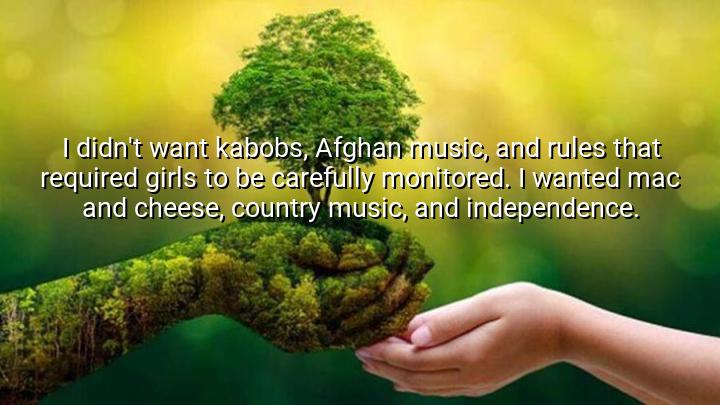




In this quote, Azita Ghanizada contrasts the expectations placed on her by her cultural background with the desires she has for her own life. The reference to kabobs, Afghan music, and strict rules represents her heritage, which often comes with traditional customs and expectations, particularly for women. These practices may involve being carefully monitored, reflecting the conservative nature of some cultural norms that can limit personal freedom.
On the other hand, Ghanizada expresses a longing for the comfort of mac and cheese, a symbol of a more Western lifestyle, which she associates with freedom and independence. Her preference for country music also highlights her desire to connect with a different set of values—one that emphasizes individuality and personal choice. Through this contrast, Ghanizada emphasizes the internal conflict between cultural identity and the pursuit of a more independent, self-directed life.
The quote also reflects the broader tension that many individuals face when they grow up in a culture that places heavy emphasis on tradition and family roles, yet yearn for a different kind of independence. For Ghanizada, the desire for freedom is about more than just a change in food or music; it is a yearning for the liberty to make her own choices without the constraints imposed by her cultural upbringing.
Ultimately, Azita Ghanizada’s quote speaks to the struggle between honoring one’s cultural roots and carving out a path that embraces personal freedom. It highlights the universal desire to find a balance between tradition and the pursuit of a life that feels authentically one's own, where independence and self-expression can flourish without the weight of restrictive societal rules.

AAdministratorAdministrator
Welcome, honored guests. Please leave a comment, we will respond soon