

Hunger, revenge, to sleep are petty foes, But only death the jealous eyes can close.
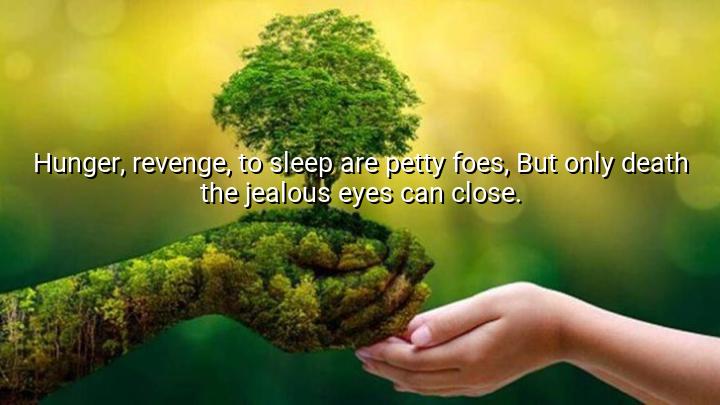




The quote " Hunger, revenge, to sleep are petty foes, But only death the jealous eyes can close" comes from William Wycherley, a 17th-century English playwright known for his sharp wit and satirical works. This line is from his play The Country Wife, which reflects the complexities of human nature and the pursuit of desires. Wycherley uses this quote to convey that while basic human struggles like hunger, the desire for revenge, and the need for sleep are significant, they are ultimately minor compared to the overwhelming and inevitable force of death.
In this quote, Wycherley contrasts the temporary, often selfish battles we face in life—such as the gnawing sensation of hunger, the urge for revenge, and the universal need for rest—with the finality of death. These "petty foes" are struggles that come and go, but death is portrayed as the one force that truly ends all struggles, especially those driven by human desires. The phrase "only death the jealous eyes can close" is a powerful metaphor, implying that death is the only thing capable of permanently silencing life's intense emotions and conflicts.
The mention of "jealous eyes" adds a layer of complexity to the quote, suggesting that death is not just the end of life, but also a jealous, all-encompassing force that takes away everything—including desires, ambitions, and the very act of living. This personification of death as a jealous entity implies that it is possessive and final, marking the ultimate conclusion to all human struggles, no matter how fierce or petty they may seem.
Wycherley’s message here speaks to the inevitability of death and the futility of clinging to transient desires. In a world full of fleeting conflicts and desires, death stands as the unyielding truth, reminding us that all struggles—be they physical or emotional—will eventually be overshadowed by its certainty. This philosophical perspective is a poignant reminder of the limits of human existence.

AAdministratorAdministrator
Welcome, honored guests. Please leave a comment, we will respond soon