

Humans are selfish, and because of our innate selfishness, I'm very confident that we can overcome any amount of environmental destruction.
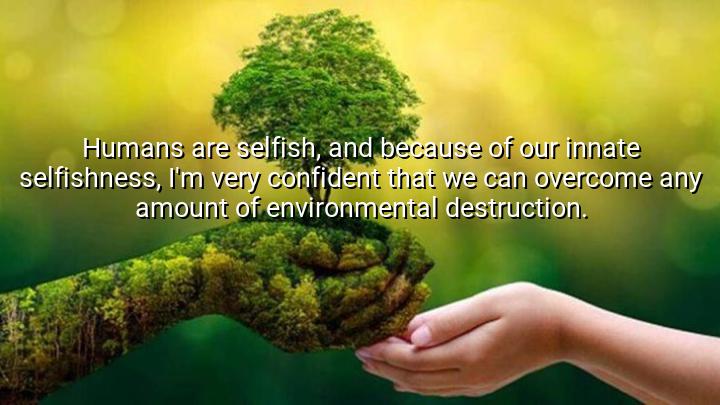




In this quote, Liu Cixin, a Chinese science fiction writer and author of the Three-Body Problem series, discusses human nature and the potential for humanity to overcome environmental destruction. He acknowledges that humans are inherently selfish, driven by personal interests and survival instincts. However, he suggests that this very selfishness can be the driving force behind our ability to adapt and recover from environmental crises, as individuals and societies work to protect their own well-being, even if it means addressing the damage done to the planet.
Liu’s statement suggests that humans, despite their negative impact on the environment, possess the resilience and ingenuity necessary to address and repair the damage. The idea that selfishness can lead to solutions is rooted in the belief that, when faced with severe environmental threats, people will eventually prioritize survival and long-term sustainability over short-term profit or convenience. This view emphasizes the potential for self-interest to drive significant efforts in areas like clean energy, conservation, and sustainable practices.
The origin of the quote comes from Liu’s broader perspective on humanity and its place in the universe, themes that are prevalent in his science fiction work. In his writings, Liu often explores the relationship between human nature, technology, and survival. This quote reflects his view that despite the apparent destruction humans have caused to the Earth, our drive for self-preservation may ultimately lead to positive change, even if it comes too late for some ecosystems.
Ultimately, Liu Cixin’s quote touches on the paradox of human behavior—while we are often selfish and short-sighted, that same selfishness could be what pushes us to find solutions to the environmental crises we face. It suggests a hopeful, albeit cynical, view of human adaptability, where survival instincts might drive us to correct the course of environmental destruction before it’s too late.

AAdministratorAdministrator
Welcome, honored guests. Please leave a comment, we will respond soon