

Hobbits are an unobtrusive but very ancient people, more numerous formerly than they are today; for they love peace and quiet and good tilled earth: a well-ordered and well-farmed countryside was their favourite haunt.
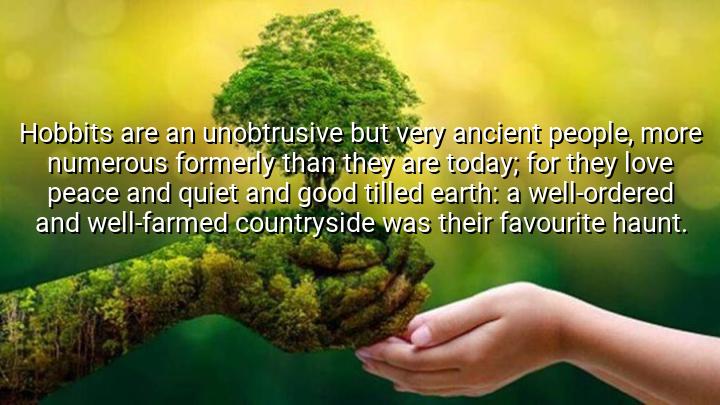




The quote by J. R. R. Tolkien, “Hobbits are an unobtrusive but very ancient people, more numerous formerly than they are today; for they love peace and quiet and good tilled earth: a well-ordered and well-farmed countryside was their favourite haunt,” emphasizes the simple, tranquil, and grounded nature of hobbits. Tolkien highlights their love for peace, stability, and the pleasures of rural life, showing that hobbits find happiness in orderly living, hard work, and connection to the land rather than in adventure or power.
The origin of this quote lies in Tolkien’s work as a 20th-century English writer, philologist, and author of The Hobbit and The Lord of the Rings. In these works, Tolkien often explores the contrast between humble, contented lives and grand, adventurous quests, using hobbits as symbols of innocence, simplicity, and the enduring values of ordinary life. The quote appears in the introduction to The Hobbit, setting the stage for readers to understand the character and culture of hobbits.
Beyond its literal meaning, the quote underscores the values of contentment, community, and respect for nature. Tolkien implies that hobbits embody a timeless wisdom about life’s priorities, where peace, work, and harmony with the environment are more fulfilling than wealth, fame, or conquest. Their lifestyle illustrates the virtue of living simply and appreciating the beauty of everyday existence.
Ultimately, the quote celebrates quiet resilience, rootedness, and love for the natural world. Tolkien reminds readers that even in a universe filled with epic battles and grand quests, the small joys of peace, community, and well-tended land hold enduring significance. His words invite reflection on the importance of simplicity, care, and connection to the world around us as essential to a meaningful life.

AAdministratorAdministrator
Welcome, honored guests. Please leave a comment, we will respond soon