

History isn't just the story of bad people doing bad things. It's quite as much a story of people trying to do good things. But somehow, something goes wrong.
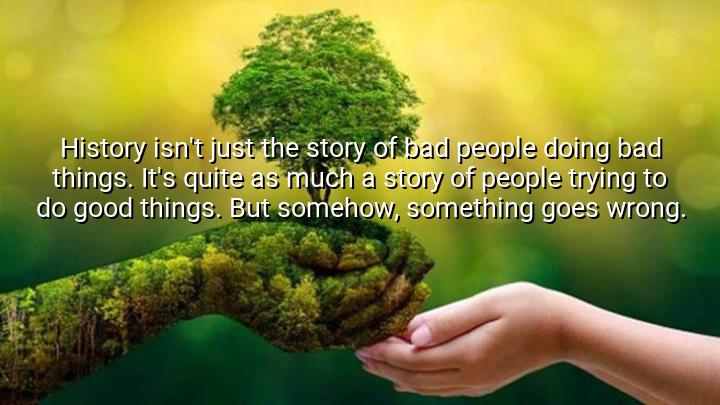




C. S. Lewis’s quote challenges the overly negative perception of history as merely a record of wars, oppression, and cruelty. He reminds us that history is also filled with examples of people attempting to do good things—to build peace, promote justice, or advance knowledge. However, he acknowledges the tragic reality that even with the best intentions, something goes wrong, and human efforts often fall short of their goals.
The meaning of this statement lies in its balanced view of human nature. Lewis, as both a scholar and a Christian thinker, believed that history reflects the complexity of humanity—our capacity for both good and evil. He suggests that understanding history requires us to see not only the failures but also the noble intentions behind human actions, even when those intentions are corrupted by pride, greed, or unforeseen consequences.
The origin of this quote can be traced to Lewis’s reflections in his essays and lectures, where he often spoke about morality, human behavior, and the lessons of history. Known primarily as the author of The Chronicles of Narnia and works of Christian apologetics like Mere Christianity, Lewis frequently wove observations about the human condition into his writings. His perspective on history fits with his broader theological outlook: that mankind is flawed but not without hope or the desire to do good.
Ultimately, Lewis’s words encourage a more nuanced approach to history. Instead of reducing it to a tale of villains and disasters, he invites us to recognize the mixture of virtue and failure that shapes human progress. His quote serves as a reminder that while mistakes are inevitable, the impulse to strive for good is just as central to the human story.

AAdministratorAdministrator
Welcome, honored guests. Please leave a comment, we will respond soon