

Higher education is confronting challenges, like the economy is, about the need for a higher number of more adequately trained, more highly educated citizenry.
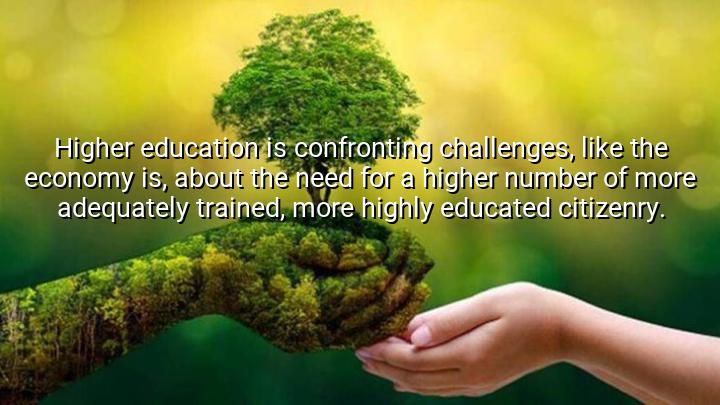




The quote “Higher education is confronting challenges, like the economy is, about the need for a higher number of more adequately trained, more highly educated citizenry.” by Margaret Spellings points to the crucial connection between higher education and the economy. Spellings argues that just as the economy faces pressures to grow and adapt, colleges and universities face the challenge of preparing enough citizens with the right skills and training to meet modern demands. In her view, the strength of a nation’s economy depends heavily on the quality and accessibility of its education system.
By stressing the need for a “more adequately trained, more highly educated citizenry,” Spellings highlights the gap between what current institutions provide and what the workforce requires. The evolving global economy increasingly demands advanced knowledge, technical competence, and innovative problem-solving abilities. Without a sufficient pool of well-educated citizens, both economic growth and democratic stability may falter.
The origin of this perspective lies in Spellings’ work as the U.S. Secretary of Education under President George W. Bush. During her tenure, she emphasized accountability, affordability, and access in higher education, pushing for reforms that would better align universities with workforce needs. Her words reflect a broader policy concern of the early 21st century: ensuring that America’s higher education system could compete globally and meet the challenges of a rapidly changing economy.
In essence, Spellings’ quote underscores the interdependence between education and economic vitality. For her, higher education is not just about personal enrichment but about cultivating the human capital necessary for national success. Her statement serves as a reminder that investments in training and education are also investments in the future stability and competitiveness of society.

AAdministratorAdministrator
Welcome, honored guests. Please leave a comment, we will respond soon