

He that cannot forgive others breaks the bridge over which he must pass himself; for every man has need to be forgiven.
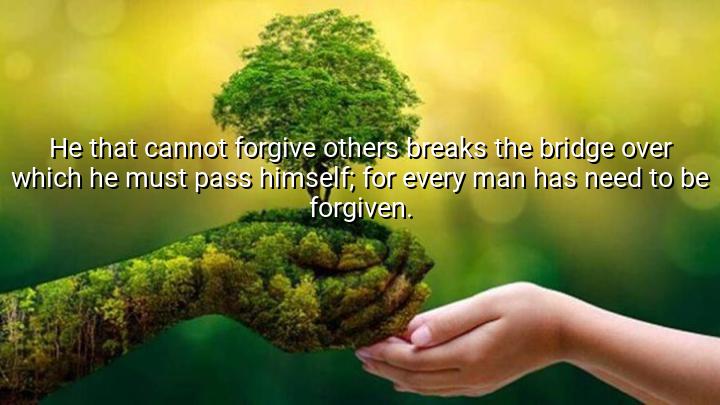




The quote "He that cannot forgive others breaks the bridge over which he must pass himself; for every man has need to be forgiven" by Thomas Fuller emphasizes the necessity of forgiveness in human relationships. Fuller suggests that when someone refuses to forgive others, they essentially destroy the pathway through which they themselves may need to pass in the future. In other words, forgiveness is not just a favor to the one who wronged us, but a mutual practice, because we all have moments when we need compassion and understanding from others.
Fuller’s metaphor of breaking a bridge reflects the idea that holding onto resentment or anger toward others can block our own ability to heal or move forward. When we refuse to forgive, we prevent ourselves from experiencing the healing and reconciliation that forgiveness can offer, trapping us in negative emotions. By not extending forgiveness, we are denying ourselves the grace that we might eventually need from others. This idea highlights the interdependence of human relationships and the universal need for both giving and receiving forgiveness.
The origin of this quote lies in Thomas Fuller, a 17th-century English clergyman and historian known for his writings on morality and religion. Fuller was often concerned with the ethical challenges people face and frequently explored the themes of virtue, forgiveness, and human behavior in his work. His perspective on forgiveness reflects the Christian teaching that grace and mercy should be extended to others, as all humans are inherently flawed and in need of redemption.
In essence, Fuller's quote serves as a reminder that forgiveness is not only a moral duty toward others but a practical tool for personal well-being. By forgiving others, we preserve the bridge to understanding and compassion, making it easier for us to find peace and reconciliation in our own lives when we make mistakes or seek forgiveness. This perspective calls for a deeper reflection on the connectedness of human experiences and the shared need for empathy and grace.

AAdministratorAdministrator
Welcome, honored guests. Please leave a comment, we will respond soon