

He that cannot forgive others, breaks the bridge over which he himself must pass if he would ever reach heaven; for everyone has need to be forgiven.
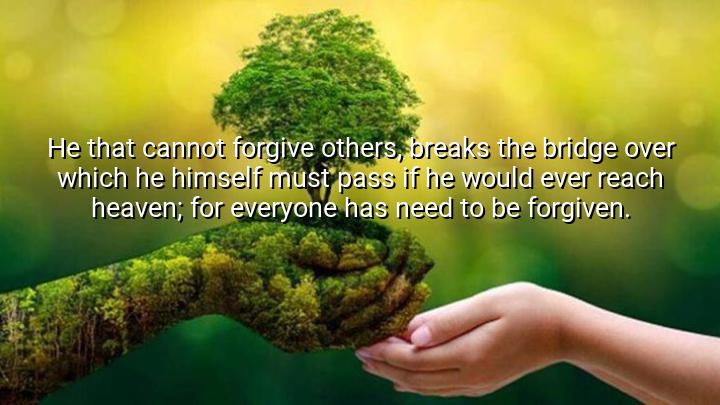




In this quote, George Herbert, a 17th-century poet and cleric, reflects on the importance of forgiveness in both spiritual and personal growth. He suggests that someone who cannot forgive others is essentially destroying the bridge that would allow them to be forgiven in return. Herbert uses the metaphor of a bridge to symbolize the pathway to spiritual salvation, implying that without forgiveness, individuals cut themselves off from the grace and mercy that are essential for their own redemption.
Herbert’s statement highlights the reciprocal nature of forgiveness: just as we seek forgiveness for our own faults, we must be willing to extend it to others. The idea that everyone has need to be forgiven underscores the universality of human imperfection. No one is without sin or error, and we all rely on the mercy of others and of God to move forward. By withholding forgiveness, a person not only harms the other but also sabotages their own chances of spiritual growth and peace.
This perspective reflects Herbert’s deeply Christian values, where forgiveness is a core tenet of faith and a crucial aspect of moral integrity. In many religious teachings, forgiveness is seen as a path to healing and a reflection of divine love. Herbert suggests that the refusal to forgive is not only a moral failing but a spiritual one, as it prevents individuals from fulfilling their ultimate goal of salvation.
Ultimately, George Herbert’s quote emphasizes that forgiveness is not just a kind gesture, but a necessary condition for spiritual well-being. By forgiving others, we create a path for ourselves to receive the same grace and compassion, making forgiveness an essential bridge for both earthly relationships and our connection to the divine.

AAdministratorAdministrator
Welcome, honored guests. Please leave a comment, we will respond soon