

Have nothing in your house that you do not know to be useful, or believe to be beautiful.
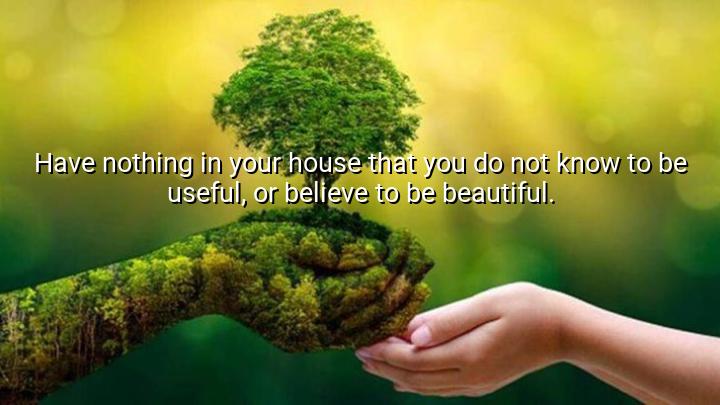




In this quote, William Morris emphasizes the importance of intentionality and aesthetic value in the things we choose to bring into our homes. He suggests that every item in a house should either serve a useful purpose or possess inherent beauty. This philosophy is rooted in the idea that our surroundings, especially the objects we keep, should contribute to our well-being and align with our values, either through functionality or aesthetic enjoyment. Morris is advocating for a conscious and thoughtful approach to the things we surround ourselves with, encouraging a space that promotes both functionality and beauty.
Morris’s words reflect a deeper belief in the relationship between art and life. He was a prominent figure in the Arts and Crafts Movement, which sought to elevate everyday objects and design, ensuring that both form and function were considered. For Morris, beauty should not be reserved for only certain objects or places but should be integrated into the fabric of daily life, particularly in the items we use and interact with on a regular basis. This idea elevates ordinary possessions, suggesting they should bring joy or serve a clear, purposeful function.
The quote also calls for a minimalist approach to living, urging people to avoid accumulating unnecessary items. If an object doesn't either have a clear practical function or evoke a sense of beauty, it serves no purpose in our homes. This view discourages clutter and encourages a lifestyle of mindfulness in how we acquire and keep things, ultimately leading to a more organized, intentional, and fulfilling living space.
Originating from William Morris, a British designer, poet, and social activist, this quote is a reflection of his broader artistic and philosophical principles. As a key figure in the Arts and Crafts Movement, Morris sought to bring beauty into everyday life and rejected mass-produced, soulless items. Through this quote, he underscores the importance of surrounding ourselves with things that enhance our lives, either through their beauty or their utility.

AAdministratorAdministrator
Welcome, honored guests. Please leave a comment, we will respond soon