

Happy is he who still loves something he loved in the nursery: He has not been broken in two by time; he is not two men, but one, and he has saved not only his soul but his life.
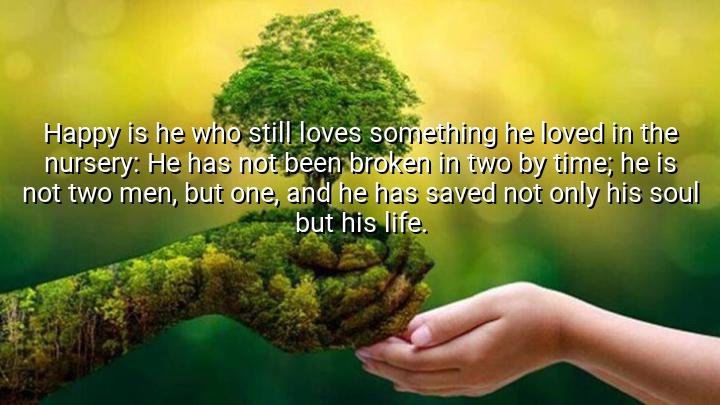




The quote by Gilbert K. Chesterton, "Happy is he who still loves something he loved in the nursery: He has not been broken in two by time; he is not two men, but one, and he has saved not only his soul but his life," speaks to the idea of retaining a childlike sense of wonder, joy, and passion throughout one's life. Chesterton suggests that those who continue to love and care for the things they cherished as children are able to maintain their authenticity and wholeness. Rather than becoming divided or hardened by the passage of time, they remain true to themselves, preserving their inner spirit and connection to what truly matters.
The origin of this quote comes from Gilbert K. Chesterton, an English writer, philosopher, and theologian known for his works on faith, society, and human nature. Chesterton often explored the relationship between innocence, imagination, and the challenges of growing older. His works celebrated the importance of maintaining a sense of wonder and authenticity in the face of life's complexities. This quote reflects his belief that the key to happiness and wholeness lies in holding onto the things that bring us genuine joy, even as we age.
Chesterton’s statement highlights that time can have a destructive effect if it causes us to abandon the things that give us meaning or prevent us from staying true to ourselves. By continuing to love the things that brought us joy as children, we remain united in our identity, rather than becoming fragmented by the pressures of adulthood or the demands of society. In this way, happiness is connected to consistency—remaining faithful to our core values and interests throughout our lives.
Ultimately, this quote is a reminder that happiness and personal fulfillment are not about constantly changing or adapting to new circumstances, but about staying connected to the things that have always brought us joy. Chesterton suggests that in holding on to those early loves, we not only preserve our soul, but also our life, maintaining our spirit and passion despite the passage of time.

AAdministratorAdministrator
Welcome, honored guests. Please leave a comment, we will respond soon