

Happiness is not a matter of intensity but of balance, order, rhythm and harmony.
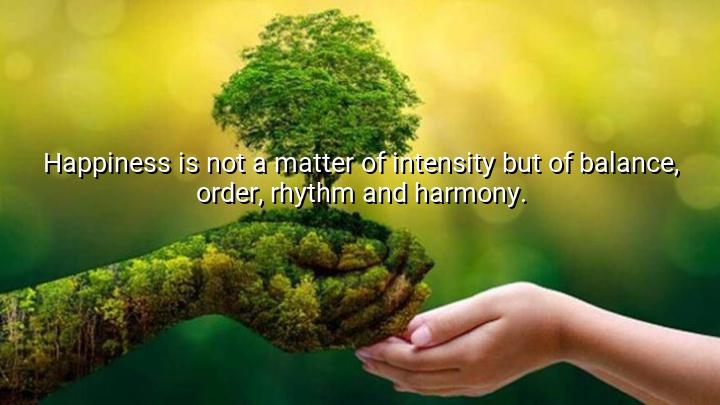




In this quote, Thomas Merton offers a deeper understanding of happiness by emphasizing that it is not about intense emotions or dramatic highs, but rather about achieving balance, order, rhythm, and harmony in life. Merton suggests that happiness comes from creating a stable and peaceful life, where different aspects—such as work, relationships, and personal well-being—are in alignment. It’s the consistency and equilibrium between these elements that brings true fulfillment, rather than fleeting moments of excitement or extreme joy.
Merton contrasts the idea of happiness with the concept of intensity, which often leads people to chase after moments of high emotions or external success. While these moments can be enjoyable, they are not sustainable. In contrast, balance and order create a foundation that supports lasting happiness. The quote speaks to the idea that happiness is more about how we live our lives day-to-day, finding a natural flow rather than seeking external, intense bursts of emotion.
The mention of rhythm and harmony also speaks to a more philosophical view of life. Merton's words suggest that when we align our actions, thoughts, and emotions in a consistent, purposeful way, we create a sense of peace and fulfillment. The metaphor of rhythm evokes the idea of a natural flow, while harmony suggests that all aspects of life should complement each other, rather than compete or create chaos.
Ultimately, Merton’s quote offers a holistic view of happiness, encouraging us to focus on creating a balanced life that fosters sustained contentment. By prioritizing order and harmony, we can cultivate a happiness that endures, rather than relying on temporary, intense experiences. The message is clear: true happiness is found not in extremes, but in finding peace and balance in the everyday rhythm of life.

AAdministratorAdministrator
Welcome, honored guests. Please leave a comment, we will respond soon