

Happiness includes chiefly the idea of satisfaction after full honest effort. No one can possibly be satisfied and no one can be happy who feels that in some paramount affairs he failed to take up the challenge of life.
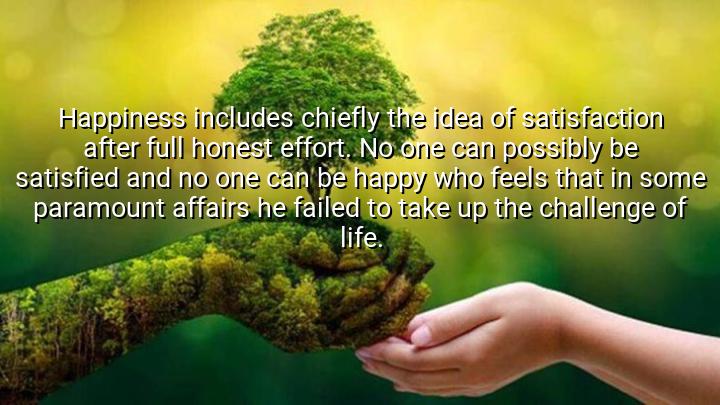




In this quote, Arnold Bennett emphasizes that happiness is closely tied to the feeling of satisfaction that comes after making a full, honest effort. True happiness, according to Bennett, is not about passive enjoyment or mere comfort but about actively engaging with life and putting forth one’s best effort. The sense of accomplishment that follows genuine effort leads to a deep, lasting satisfaction that forms the foundation of real happiness.
Bennett also asserts that happiness is unattainable for those who feel they have failed to confront the challenges of life, particularly in matters that truly matter to them. When a person avoids or shirks significant challenges, they may feel a lingering sense of regret or dissatisfaction, knowing they didn’t give their all. This failure to take on life’s essential challenges undermines the potential for happiness, as it creates a gap between what was possible and what was achieved.
The origin of this idea is grounded in Bennett’s broader philosophy of personal responsibility and self-fulfillment. Throughout his work, he explored how individuals can create their own meaning and happiness by being honest with themselves and engaging in life with integrity. Challenge, effort, and a sense of responsibility were central themes in his writing, and this quote encapsulates his belief that one cannot truly be happy without facing life’s essential struggles.
Ultimately, Bennett's quote conveys a powerful message: happiness is not a simple, fleeting emotion but the result of taking responsibility for one’s life. It involves embracing effort and challenge, knowing that real satisfaction comes from tackling life’s difficulties head-on and making the most of every opportunity.

AAdministratorAdministrator
Welcome, honored guests. Please leave a comment, we will respond soon