

Great love, like great genius, can never be a duty: both are life's gracious gifts to its elect.
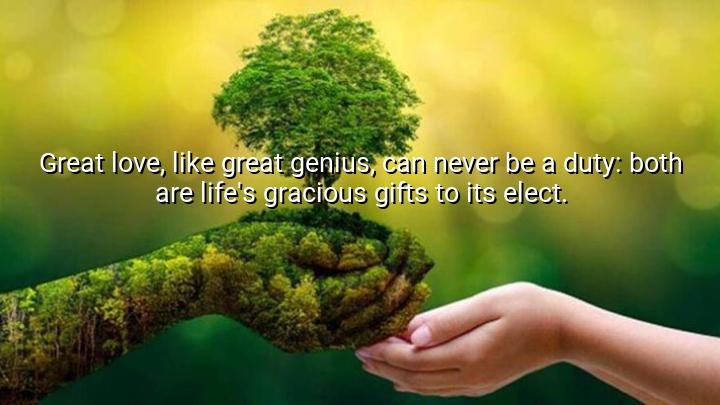




In this quote, Ellen Key, a Swedish writer and feminist, reflects on the nature of great love and great genius, suggesting that both are extraordinary gifts that cannot be imposed as duties. She emphasizes that these profound experiences are not things one can force or expect; they are given only to a select few, those who are fortunate enough to experience them. For Key, love and genius are not obligations, but rather privileges that enrich the lives of those who possess them.
Key’s statement contrasts love and genius with the idea of duty, which often implies something that is required or expected of someone. By positioning love and genius as gifts, she suggests that they are more about inspiration and natural talent than effort or responsibility. This perspective aligns with her belief in the autonomy and freedom of individuals to express themselves, particularly in areas of deep emotional and intellectual capacity.
The quote also touches on the idea of destiny or being "elect," where certain people are chosen or blessed with extraordinary abilities or feelings. For Key, these individuals are not bound by the same constraints as the general population but are granted unique experiences that set them apart. This makes both love and genius feel less like something that can be earned or worked for, and more like something that happens naturally for a select group.
Ultimately, Key's quote highlights the mystical and unpredictable nature of love and genius. It reflects her understanding that the most powerful emotions and talents are not accessible to everyone, and that those who experience them should appreciate their giftedness. In this way, the quote serves as a celebration of the rare and uncontainable forces of life that elevate individuals beyond the ordinary.

AAdministratorAdministrator
Welcome, honored guests. Please leave a comment, we will respond soon