

Grave security concerns can arise as a result of demographic trends, chronic poverty, economic inequality, environmental degradation, pandemic diseases, organized crime, repressive governance and other developments no state can control alone. Arms can't address such concerns.
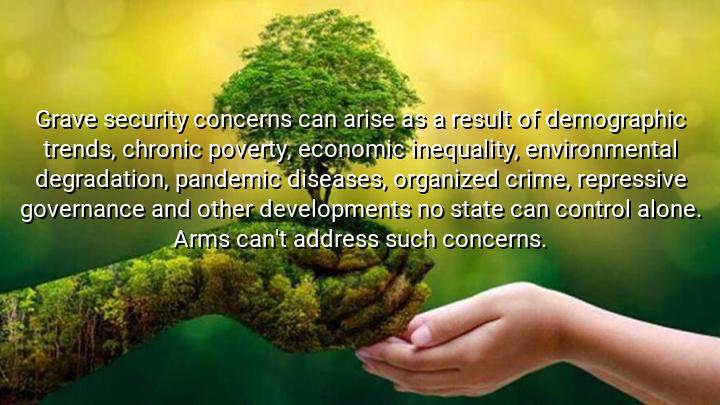




The quote, "Grave security concerns can arise as a result of demographic trends, chronic poverty, economic inequality, environmental degradation, pandemic diseases, organized crime, repressive governance and other developments no state can control alone. Arms can't address such concerns," comes from Ban Ki-moon, the eighth Secretary-General of the United Nations. Ban was a leading advocate for global cooperation and multilateral solutions to complex international challenges. This quote reflects his belief that modern security threats extend beyond traditional military concerns and require comprehensive, cooperative strategies.
At its core, Ban Ki-moon is highlighting the complexity of contemporary security challenges. He points out that issues such as poverty, inequality, environmental degradation, pandemics, and organized crime are interconnected and cannot be effectively managed by individual states acting alone. These problems require collaborative approaches, including international law, diplomacy, development programs, and sustainable policies, rather than reliance solely on military force.
The origin of the quote reflects Ban’s tenure at the UN, where he frequently emphasized that true global security is inseparable from human development, social justice, and environmental sustainability. By identifying non-military threats as central to security, he challenged the traditional notion that arms and defense spending are sufficient to protect nations. His message underscores the need for preventive action and international cooperation to tackle root causes of instability.
In summary, this quote serves as both a warning and a call to action. Ban Ki-moon reminds world leaders and policymakers that modern security is deeply tied to socioeconomic and environmental factors, and that effective solutions require collaboration, prevention, and systemic approaches rather than reliance on military power alone. It emphasizes the importance of addressing the underlying causes of conflict and insecurity for a sustainable and peaceful world.

AAdministratorAdministrator
Welcome, honored guests. Please leave a comment, we will respond soon