

Gentleness, self-sacrifice and generosity are the exclusive possession of no one race or religion.
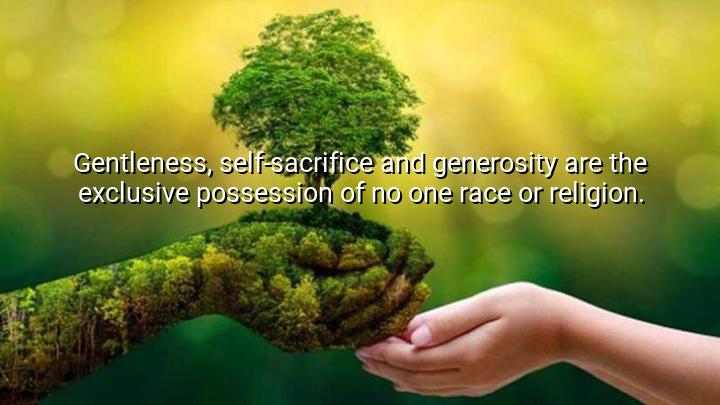




In this quote, Mahatma Gandhi emphasizes that qualities like gentleness, self-sacrifice, and generosity are not the exclusive traits of any particular race or religion. Gandhi stresses the universality of these virtues, suggesting that they transcend cultural, religious, or ethnic boundaries and are inherent possibilities in all human beings. He challenges the idea that any one group holds a monopoly on goodness or moral values, promoting instead the notion that these qualities are accessible and valuable across all human societies.
Gandhi’s belief in the universal nature of virtues aligns with his broader philosophy of nonviolence (Ahimsa) and unity. He believed that no matter one’s faith or cultural background, the fundamental human qualities of compassion, selflessness, and kindness could unite people. By framing these attributes as universal, Gandhi encouraged individuals to see beyond the differences that divide us and recognize our shared capacity for moral action.
The origin of this quote can be found in Gandhi’s reflections on interfaith dialogue, his advocacy for religious tolerance, and his efforts to promote social justice. As a leader of India’s independence movement, Gandhi worked to bridge the gaps between Hindus, Muslims, and other communities, emphasizing the commonalities in human nature rather than the differences. His life and teachings sought to demonstrate that virtues like generosity and sacrifice were not restricted by religious affiliation, but could be found across all cultures.
Ultimately, Gandhi’s quote is a call for compassionate coexistence and mutual respect. It encourages us to look beyond labels and divisions and focus on the shared human capacity for goodness. By recognizing that gentleness, self-sacrifice, and generosity belong to no single group, we are reminded of our collective responsibility to nurture these qualities in our interactions with others, fostering peace, understanding, and solidarity in a divided world.

AAdministratorAdministrator
Welcome, honored guests. Please leave a comment, we will respond soon