

Forgiveness is indifference. Forgiveness is impossible while love lasts.
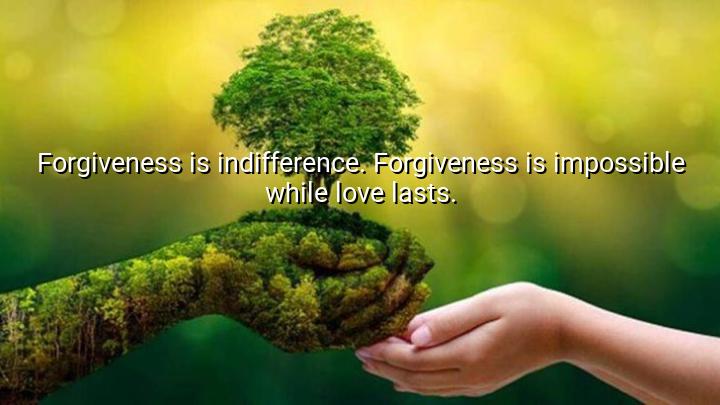




Mary Boykin Chesnut’s quote, "Forgiveness is indifference. Forgiveness is impossible while love lasts," suggests a complex and somewhat cynical view of forgiveness and love. Chesnut argues that true forgiveness cannot exist as long as there is love involved because love inherently involves strong emotions, attachment, and care for the other person. When we still love someone, their actions can deeply affect us, and forgiveness, in this sense, would require a level of indifference—a detachment from the emotional impact of their behavior. In her view, forgiveness can only occur when love has been overcome or when the emotional connection has been severed.
The quote suggests that forgiveness isn't a simple act of letting go of resentment, but rather an emotional shift. If someone is still emotionally invested in another person, forgiveness becomes difficult because love still creates a bond that makes their actions significant. Chesnut implies that the pain of being hurt by someone you love keeps you from being truly indifferent to their actions, and therefore, forgiveness becomes unattainable. For her, indifference is not a lack of caring, but a state in which you no longer feel the emotional sting of the other person’s actions.
The origin of this perspective likely comes from Chesnut’s own experiences as a Southern woman during the American Civil War, as she wrote extensively about the emotional and societal turmoil of the time in her diaries. She was deeply influenced by the personal relationships and events she witnessed, particularly the struggles of love, loyalty, and betrayal. Her insights into forgiveness reflect the complexity of human emotions, particularly in the context of intimate relationships and societal pressures.
Ultimately, Chesnut’s quote highlights the tension between love and forgiveness, suggesting that the emotional weight of love makes it difficult to achieve true forgiveness. The quote reflects a more realistic or pessimistic view of relationships, where forgiveness can only occur once love has faded or been diminished, and indifference has taken its place. It challenges the conventional idea that forgiveness is about letting go of resentment, instead offering that it might require a complete emotional detachment from the person who caused harm.

AAdministratorAdministrator
Welcome, honored guests. Please leave a comment, we will respond soon