

Forgiveness is hard for me, man. It is for most American-Western males. It's a sign of weakness.
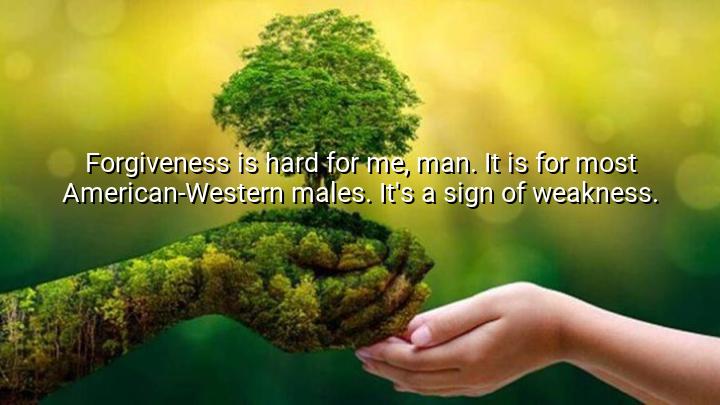




The quote by Art Alexakis addresses the challenge of forgiveness, particularly within the context of American-Western masculinity. Alexakis suggests that for many men, especially in Western cultures, forgiveness is seen as a weakness, as it goes against traditional ideals of strength and stoicism. In these cultures, expressing vulnerability, such as forgiving someone who has wronged you, is often discouraged because it’s perceived as a sign of emotional fragility rather than strength.
Alexakis' statement highlights the societal pressure on men, especially in the West, to uphold ideals of toughness and emotional restraint. Forgiveness, being an emotionally charged act that requires letting go of anger or resentment, challenges these notions of masculinity. By acknowledging that forgiveness is hard for him and many others, Alexakis opens up a conversation about the emotional struggles that are often hidden behind a tough exterior, especially in a culture where men are not always encouraged to express vulnerability or compassion.
The origin of the quote comes from Art Alexakis, the lead singer and songwriter of the rock band Everclear. Known for his deeply personal lyrics and exploration of emotional struggles, Alexakis often addresses themes of pain, anger, and healing in his music. This quote reflects his introspective nature and his willingness to confront difficult emotions, including those associated with forgiveness.
In a broader context, Alexakis’ words highlight the societal challenges that prevent many individuals, particularly men, from embracing forgiveness as a form of emotional strength. His statement calls attention to the need for cultural shifts that encourage emotional openness and the recognition that forgiveness is not a sign of weakness but an important aspect of personal growth and healing. It also underscores the complexity of navigating emotional vulnerability in a world that often prizes resilience over emotional expression.

AAdministratorAdministrator
Welcome, honored guests. Please leave a comment, we will respond soon