

Forgiveness is a very personal and intimate thing. Forgiveness is not something that you can speak for others because it includes not only your desire and will, your reflection and intellect, but also your emotions.
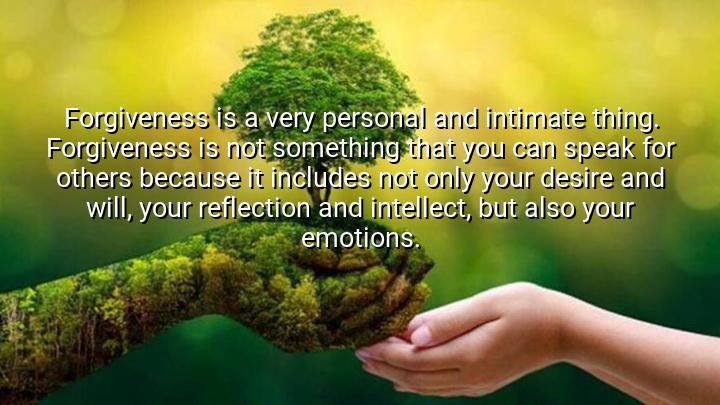




Ingrid Betancourt’s quote emphasizes that forgiveness is deeply personal and intimate. She highlights that it is not a one-size-fits-all process and cannot be imposed on others. Forgiveness involves an individual’s personal journey, which includes not only their desire and will to forgive, but also their emotions and reflections. This perspective suggests that forgiveness is a holistic process that encompasses both rational thought and emotional healing.
Betancourt also points out that forgiveness is not something that can be done on behalf of someone else. It requires personal introspection and the willingness to release negative emotions such as anger, hurt, or resentment. This makes the act of forgiving complex, as it requires one to reconcile their intellect with their emotions—both of which are involved in letting go of past wrongs.
The mention of emotions in the quote stresses that forgiveness is not just a mental decision but also an emotional one. It is a way to heal emotionally and regain peace, which requires a deep and often challenging inner transformation. This underscores the idea that forgiveness isn’t a simple act of forgetting or excusing, but a profound emotional process that requires effort, time, and personal growth.
Ultimately, Betancourt’s quote reveals that forgiveness is a deeply individual experience. It is not something that can be dictated or generalized because it involves a complex interplay of intellectual, emotional, and willful components. Forgiveness, therefore, is not just a moral or spiritual act, but a deeply personal decision that involves healing on multiple levels.

AAdministratorAdministrator
Welcome, honored guests. Please leave a comment, we will respond soon