

Forgive me my nonsense, as I also forgive the nonsense of those that think they talk sense.
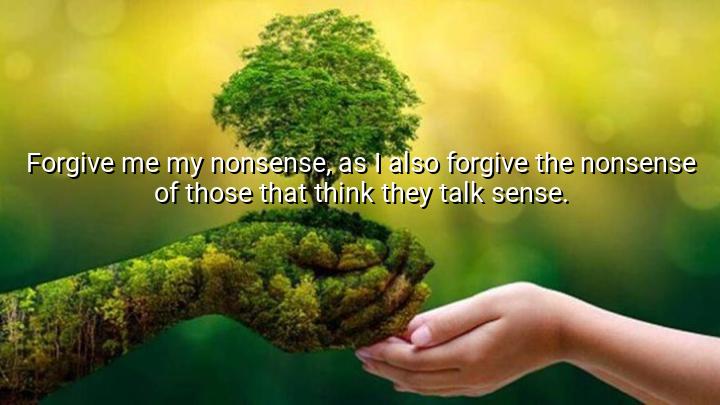




In this quote, Robert Frost, an American poet known for his wit and wisdom, humorously reflects on the nature of forgiveness and human communication. Frost suggests that we all have moments of nonsense, whether in our own actions or in the things we say, and we must ask for forgiveness for these times of foolishness. By doing so, he also acknowledges that others, too, can be forgiven for their own nonsense, even when they believe their words or actions are reasonable or logical.
Frost’s use of humor in this quote underscores his belief in the fallibility of human beings. He draws attention to the fact that everyone has moments where their thoughts or statements might seem nonsensical, yet they often present them as if they are filled with wisdom. The quote reflects a common human tendency to view our own behavior as rational, while overlooking the absurdity of others’ actions. This playful take on forgiveness encourages an acceptance of imperfection in ourselves and others.
The quote also speaks to the idea of self-awareness and humility. Frost is acknowledging that just as we often fail to see our own flaws, we may also judge others without realizing their mistakes. By asking for forgiveness for his own nonsense, he invites others to do the same. This shared understanding of human imperfection creates an opportunity for mutual forgiveness and compassion, allowing for deeper connections and less judgment.
Ultimately, Frost’s words remind us that forgiveness is not only about letting go of serious wrongdoings, but also about accepting the small, everyday flaws that come with being human. By forgiving the nonsense in both ourselves and others, we create space for more patience, understanding, and growth in our relationships.

AAdministratorAdministrator
Welcome, honored guests. Please leave a comment, we will respond soon