

For too much of history, we've viewed the world's precious resources - both environmental and human - as things to extract, to make the most of in order to maximize their potential.
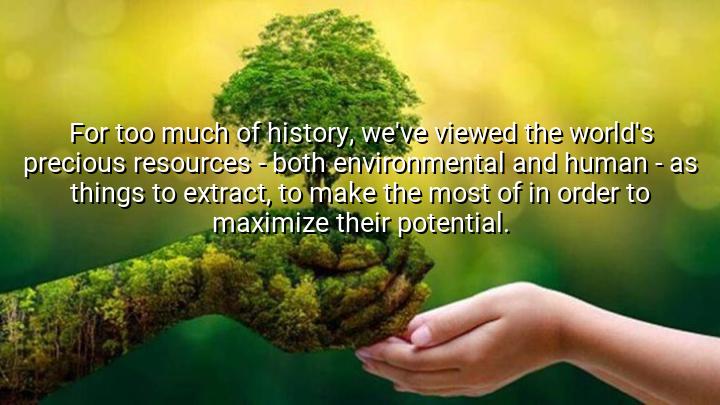




In this quote, Jacqueline Novogratz, a renowned social entrepreneur and founder of the Acumen Fund, reflects on the traditional view of resources, both environmental and human, as commodities to be exploited for maximum gain. She critiques this mindset, which has dominated much of history, focusing solely on extracting value without considering the long-term impact on both the planet and the people who contribute to economic systems. This perspective often leads to sustainability challenges and inequality, as it prioritizes immediate returns over long-term well-being.
Novogratz’s statement challenges the extractive mindset and encourages a shift towards a more sustainable and equitable approach to managing resources. She implies that true value comes not from depletion, but from using resources in a way that benefits future generations and promotes social good. The focus should be on creating value that is sustainable and inclusive, ensuring that both people and the environment thrive.
The origin of this quote can be traced to Novogratz’s career as a leader in impact investing and social change. She has worked with organizations that aim to empower marginalized communities and address pressing social and environmental challenges. Her work is rooted in the belief that the future of business and development lies in prioritizing human dignity, sustainability, and social responsibility.
Ultimately, Novogratz’s quote calls for a fundamental shift in how we view and interact with resources. Rather than seeing them as things to be maximized and depleted, we should approach them with an understanding of interconnectedness and stewardship, ensuring that future generations inherit a world that is not just wealthier, but healthier and more equitable.

AAdministratorAdministrator
Welcome, honored guests. Please leave a comment, we will respond soon