

For the record, I don't worship the devil. I just hate religion.
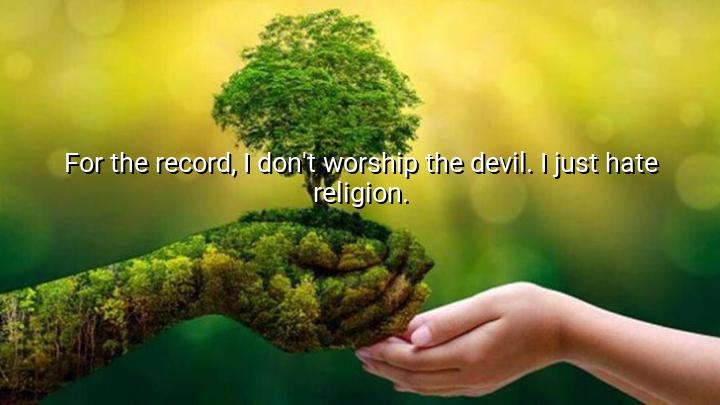




The quote "For the record, I don't worship the devil. I just hate religion," from Tyler, The Creator, reflects the artist's provocative and rebellious stance towards traditional structures of faith. Tyler, known for his boundary-pushing music and controversial statements, uses this quote to distinguish between anti-religion sentiment and an embrace of darker, more rebellious ideologies. The statement emphasizes his disillusionment with organized religion rather than an endorsement of Satanism or worshiping evil forces, challenging common assumptions about his beliefs.
By stating he "hates religion," Tyler is likely expressing frustration with the dogmatic nature of religious institutions, which he may see as oppressive, hypocritical, or limiting to personal freedom and expression. In his work, he often explores themes of individuality, self-discovery, and rejecting societal norms, which could be seen as part of his critique of how religion has historically influenced culture and restricted personal growth. For him, the institutionalization of religion may represent a force that suppresses personal autonomy rather than fostering spiritual enlightenment.
Despite the directness of the quote, Tyler clarifies that he does not "worship the devil," indicating that his message is not about embracing dark forces but rather rejecting the norms and conventions imposed by religion. The use of provocation here is consistent with his artistic persona, as he often stirs controversy to spark deeper conversations about the nature of belief and personal autonomy.
Ultimately, Tyler's statement reflects a larger cultural trend where individuals question or step away from traditional religious practices in search of more authentic and personalized spiritual or philosophical expressions. His quote can be seen as a challenge to societal expectations, a declaration of freedom from rigid dogmas, and an exploration of alternative ways to approach life and identity.

AAdministratorAdministrator
Welcome, honored guests. Please leave a comment, we will respond soon