

For much of its existence, design was all about convenience. We wanted to hide technology so that users are not distracted into thinking about the tools they use.
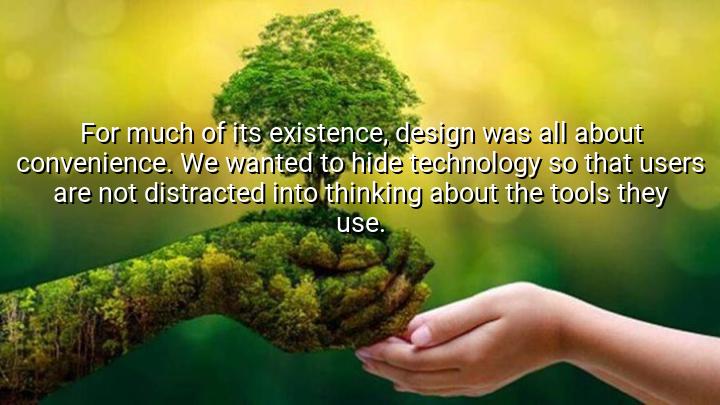




The quote "For much of its existence, design was all about convenience. We wanted to hide technology so that users are not distracted into thinking about the tools they use," by Evgeny Morozov, reflects on the historical approach to design in the context of technology and user experience. Morozov, a technology and society expert, suggests that traditional design focused primarily on making technology seamless and user-friendly. The goal was to create products and interfaces that were so intuitive that users could use them without needing to think about the tools themselves, allowing them to focus on their tasks.
Morozov's statement touches on the idea that design has historically aimed to be as invisible as possible, enabling users to engage with technology without being distracted by its complexity. By hiding the technical aspects of a product, designers could create a smoother, more accessible experience, where the focus was entirely on the user's needs rather than the underlying technology. This approach was particularly prominent in the design of everyday consumer electronics like phones, computers, and household devices.
However, Morozov also seems to suggest that this pursuit of convenience and ease of use might have resulted in a lack of engagement with the broader implications of technology. By hiding the technology behind sleek designs, users may become less aware of the social, political, or environmental consequences of the tools they use. This critique challenges the idea that simplicity in design is always a positive thing, urging a deeper reflection on the relationship between design and technology.
In essence, Morozov's quote highlights a shift in the philosophy of design: while convenience and ease of use were once the primary goals, there is now a growing recognition of the need to confront and understand the technologies we interact with, rather than merely hiding them from view. This shift reflects a more critical approach to design, where awareness of technology's role in our lives is as important as its functionality.

AAdministratorAdministrator
Welcome, honored guests. Please leave a comment, we will respond soon