

False friendship, like the ivy, decays and ruins the walls it embraces; but true friendship gives new life and animation to the object it supports.
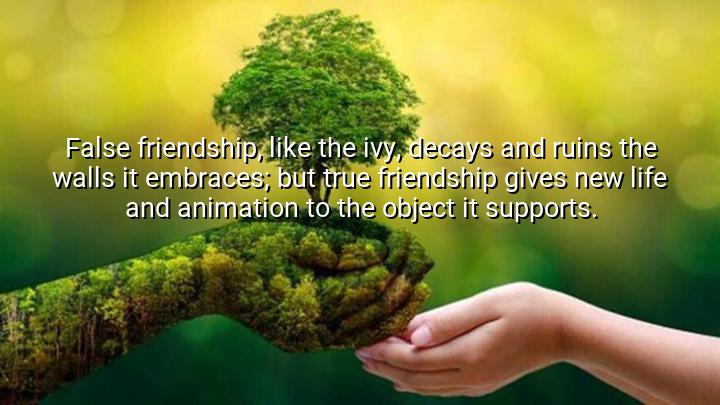




The quote "False friendship, like the ivy, decays and ruins the walls it embraces; but true friendship gives new life and animation to the object it supports" by Richard Burton draws a powerful comparison between friendship and ivy. Burton suggests that false friendship, like ivy, may initially seem to be supportive but ultimately causes harm, weakening and decaying the foundation it clings to. In contrast, true friendship nurtures and strengthens the person or relationship it supports, bringing life and vitality, much like how healthy plants support and enhance their surroundings.
This quote emphasizes the dangers of insincere or shallow friendships. False friendships may appear supportive on the surface, but they often lead to destruction or emotional drain, causing harm over time. In contrast, true friendship enriches our lives, offering support, encouragement, and renewal. The analogy of ivy highlights how destructive relationships can slowly erode the strength of the person they are meant to support, while genuine friendships invigorate and bring out the best in others.
The origin of this quote comes from Richard Burton, a well-known English actor, and writer, often reflecting on themes of human nature, morality, and personal integrity. He was known for his dramatic views on life and relationships, and this quote encapsulates his belief in the profound impact of genuine connections. Through this metaphor, Burton highlights the stark contrast between the negative influence of false relationships and the positive, life-giving nature of real friendship.
Ultimately, this quote serves as a reminder of the importance of recognizing and nurturing true friendships. It encourages us to value relationships that support our growth and well-being, while being cautious of those that may appear helpful but ultimately cause harm. Burton underscores that true friendships have the power to revitalize and strengthen us, much like how a well-supported structure can flourish with proper care.

AAdministratorAdministrator
Welcome, honored guests. Please leave a comment, we will respond soon