

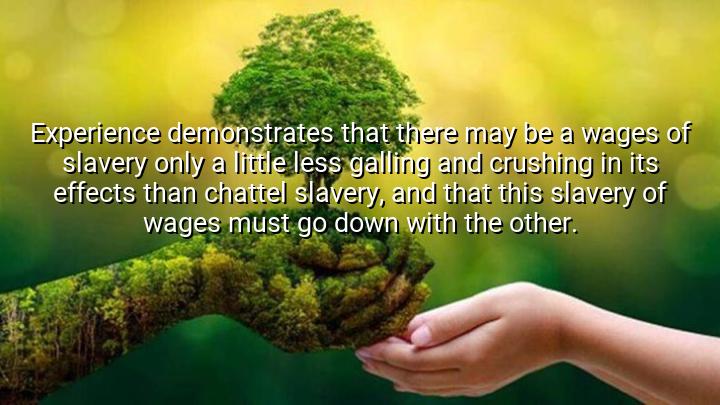
Experience demonstrates that there may be a wages of slavery only a little less galling and crushing in its effects than chattel slavery, and that this slavery of wages must go down with the other.
Experience demonstrates that there may be
Experience demonstrates that there may be a wages of slavery only a little less galling and crushing in its effects than chattel slavery, and that this slavery of wages must go down with the other.

Experience demonstrates that there may be
Experience demonstrates that there may be a wages of slavery only a little less galling and crushing in its effects than chattel slavery, and that this slavery of wages must go down with the other.
Experience demonstrates that there may be
Experience demonstrates that there may be a wages of slavery only a little less galling and crushing in its effects than chattel slavery, and that this slavery of wages must go down with the other.
Experience demonstrates that there may be
Experience demonstrates that there may be a wages of slavery only a little less galling and crushing in its effects than chattel slavery, and that this slavery of wages must go down with the other.
Experience demonstrates that there may be
Experience demonstrates that there may be a wages of slavery only a little less galling and crushing in its effects than chattel slavery, and that this slavery of wages must go down with the other.
Experience demonstrates that there may be

This quote by Frederick Douglass highlights the harsh realities of wage slavery, suggesting that it is only slightly less oppressive than chattel slavery. Douglass uses the term "wages of slavery" to criticize the exploitative labor systems that trap workers in conditions that limit their freedom and dignity, even after the formal abolition of slavery. He argues that this form of economic bondage must be abolished just like chattel slavery was.

The meaning behind the quote is a powerful condemnation of unjust labor practices and social inequalities. Douglass points out that earning wages does not necessarily guarantee true freedom if the work conditions are dehumanizing or exploitative. His call for wage slavery to "go down with the other" reflects a desire for comprehensive social justice and economic reform.

Frederick Douglass, a former enslaved person turned abolitionist leader and orator, was deeply committed to fighting all forms of oppression. His words here extend his fight for freedom beyond slavery itself to include economic systems that perpetuate inequality and injustice.

In summary, the quote urges society to recognize and dismantle modern forms of slavery rooted in unfair labor conditions. It underscores Douglass’s vision of complete liberation—social, political, and economic—for all people.

Frederick Douglass
Frederick Douglass

American - Author February 14, 1818 - February 20, 1895

Have 0 Comment Experience demonstrates that there may be

AAdministratorAdministrator

Welcome, honored guests. Please leave a comment, we will respond soon

Reply.
Information sender
Leave the question
Click here to rate
Information sender
0.17204 sec| 2565.773 kb