

Exile is not a time frame. Exile is an experience. It's a sentiment.
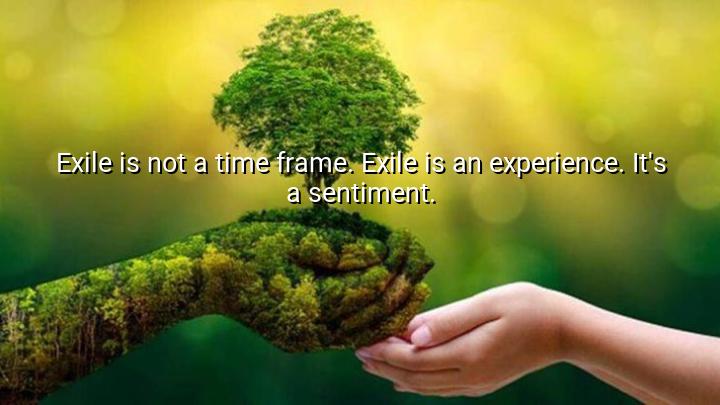




In the quote, "Exile is not a time frame. Exile is an experience. It's a sentiment," Marco Rubio emphasizes that exile is not simply defined by how long someone is away from their homeland, but by the emotional and psychological weight of being disconnected from one’s native country. He reframes exile as more than a physical state of displacement—it is a deep personal experience, marked by feelings of loss, nostalgia, and longing. This perspective captures the enduring sense of identity and absence that exiles carry with them, regardless of time or distance.
Rubio’s use of the word "sentiment" suggests that exile is rooted in emotional memory, in the cultural and familial connections that persist even when one is far removed from their origins. This quote draws attention to the fact that for many people, particularly those forced to flee due to political unrest, persecution, or war, exile is not something that ends easily. Even after decades, the sense of being an outsider or of having lost something fundamental can remain very much alive.
The origin of this quote comes from Marco Rubio’s reflections on his family’s history as Cuban exiles who fled the Castro regime. As a U.S. Senator and son of immigrants, Rubio has often spoken about the enduring impact of diaspora on individuals and communities. His statement underscores a broader understanding of exile that goes beyond physical relocation—it captures the emotional legacy and cultural dislocation that shape generations.
Ultimately, Rubio’s quote invites a deeper empathy for those who live in exile, urging us to see it not as a temporary condition, but as a lasting part of personal and collective identity. It reminds us that the pain of separation from one’s homeland is not measured in years, but in the ongoing emotional and spiritual experience of being away from home.

AAdministratorAdministrator
Welcome, honored guests. Please leave a comment, we will respond soon