

Every parting gives a foretaste of death, every reunion a hint of the resurrection.
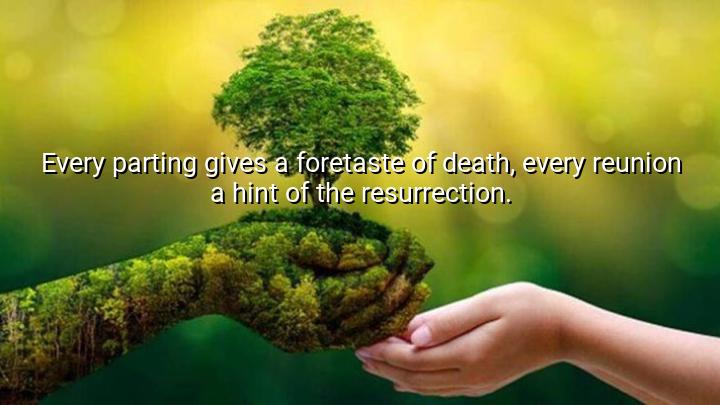




The quote "Every parting gives a foretaste of death, every reunion a hint of the resurrection" by Arthur Schopenhauer reflects his philosophical views on the human experience of separation and reunion, and how these experiences parallel the concepts of death and resurrection. Schopenhauer, a German philosopher known for his pessimistic worldview, suggests that the emotional weight of parting from someone, whether temporary or permanent, evokes a sense of loss similar to the finality of death. It speaks to the deep sorrow and emotional impact that comes with separation, often reminding us of the inevitable end we will all face.
On the other hand, Schopenhauer contrasts this with reunion, which he likens to the idea of resurrection—the joy and relief of being reunited with someone after a period of separation. Just as resurrection in many religious traditions symbolizes new life and renewal, a reunion can bring a sense of renewal, restoring connections and emotions that were once lost. For Schopenhauer, the experience of reuniting with loved ones provides a temporary glimpse of the renewal and rebirth associated with resurrection, albeit in a more emotional, worldly sense.
The quote also touches on Schopenhauer's beliefs in the cyclical nature of existence, particularly in the context of the eternal human struggle between suffering and fleeting moments of joy. In his worldview, both parting and reunion are intrinsic parts of the human condition, reflecting the impermanence of our connections and the constant flux of life. Parting reminds us of death, the ultimate separation, while reunion offers the brief, often joyful, feeling of resurrection, which is a temporary reprieve from suffering.
Ultimately, Schopenhauer’s quote offers a meditation on the emotional experiences that shape human existence. The parallels between parting and death, and between reunion and resurrection, highlight the profound ways in which life’s transitions mirror the universal themes of mortality and renewal.

AAdministratorAdministrator
Welcome, honored guests. Please leave a comment, we will respond soon