

Every day the eye is subject to a thousand tiny shocks as a thousand industries compete for the eye-kick, the visual hook that will lock the consumer into product for that crucial second where the tiny - or not so tiny - leap of the imagination is made.
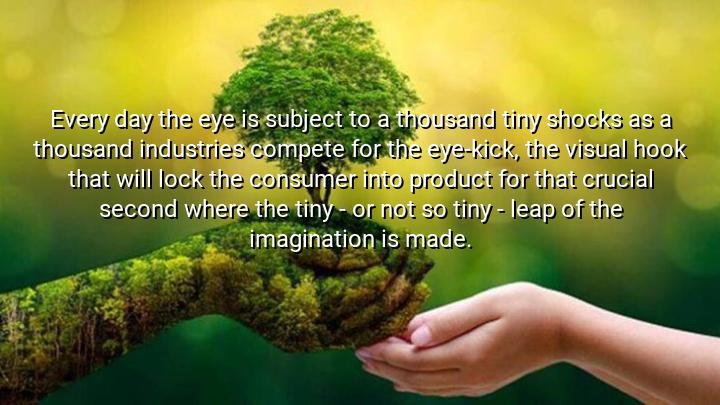




Graham Joyce’s quote, "Every day the eye is subject to a thousand tiny shocks as a thousand industries compete for the eye-kick, the visual hook that will lock the consumer into product for that crucial second where the tiny - or not so tiny - leap of the imagination is made," reflects the overwhelming nature of modern visual stimuli in advertising and media. Joyce highlights how, in our everyday lives, we are constantly bombarded by images and messages from various industries all vying for our attention. These industries seek to create a visual impact—a visual hook—that can capture our focus long enough to influence our thoughts, actions, and even purchases.
The term "eye-kick" suggests the sudden, often jarring impact of an image or visual element that grabs attention. This "shock" is designed to momentarily interrupt our mental processes and create an emotional or cognitive response. By calling it a "visual hook," Joyce emphasizes the idea that these images are crafted to captivate the viewer in such a way that they latch on to the product or idea being presented, effectively drawing the viewer into the desired action, such as making a purchase or engaging with content.
Joyce also points out that in this fleeting moment, a leap of the imagination occurs. This refers to the way a simple visual can spark a deeper thought or emotional connection, allowing the viewer to imagine themselves using the product or being part of the world the advertisement is creating. Whether the leap is "tiny or not so tiny" suggests that the emotional or intellectual impact can vary, but it is always present, influencing the viewer's perception and decision-making in ways they may not even consciously recognize.
Ultimately, the quote underscores the pervasive power of visual media in shaping our desires and perceptions. It reflects how advertising and media use visual imagery to guide our emotions, influence our actions, and make quick, impactful connections between products and our imaginations, all within a matter of seconds.

AAdministratorAdministrator
Welcome, honored guests. Please leave a comment, we will respond soon