

Every creature is better alive than dead, men and moose and pine trees, and he who understands it aright will rather preserve its life than destroy it.
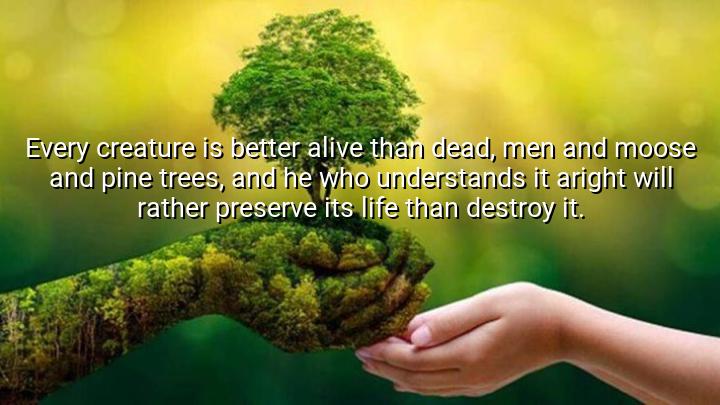




The quote by Henry David Thoreau, "Every creature is better alive than dead, men and moose and pine trees, and he who understands it aright will rather preserve its life than destroy it," emphasizes the inherent value of life in all living beings. Thoreau highlights that every organism, whether human, animal, or plant, has a role and significance in the natural world, and understanding this leads to a sense of moral responsibility to protect and respect life.
By mentioning men, moose, and pine trees, Thoreau draws attention to the interconnectedness of life. Humans are part of the same ecological system as wildlife and plants, and recognizing the importance of all creatures fosters a sense of stewardship. The quote reflects the idea that ethical living involves not only respecting human life but also taking care of the environment and the other species that share our planet.
The origin of this quote comes from Thoreau’s experiences and reflections as a naturalist, philosopher, and writer during the 19th century. Known for his work Walden and his advocacy for transcendentalist principles, Thoreau encouraged a deep connection with nature and promoted living in harmony with the natural world. His observations often blended philosophy, ecology, and ethics, emphasizing both the beauty and the moral significance of all living things.
Ultimately, Thoreau’s quote is both a moral lesson and a call to action. It encourages individuals to value life, practice compassion, and act as guardians of the natural world. By understanding the intrinsic worth of all creatures, humans are guided toward choices that preserve rather than destroy, fostering a more sustainable and ethical relationship with the environment.

AAdministratorAdministrator
Welcome, honored guests. Please leave a comment, we will respond soon