

Even at our birth, death does but stand aside a little. And every day he looks towards us and muses somewhat to himself whether that day or the next he will draw nigh.
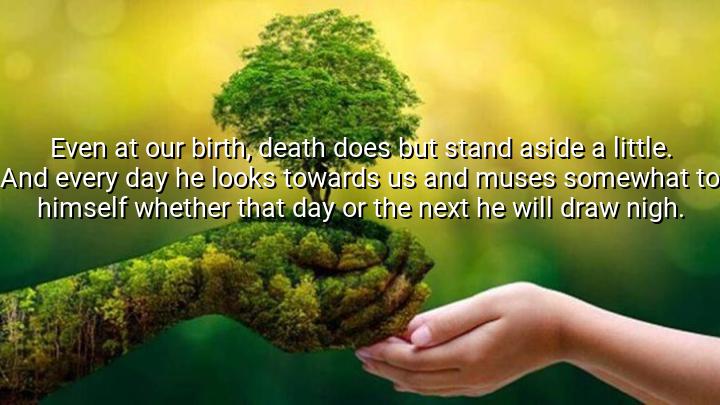




Robert Bolt's quote, "Even at our birth, death does but stand aside a little. And every day he looks towards us and muses somewhat to himself whether that day or the next he will draw nigh," reflects the constant presence and inevitability of mortality in human life. Bolt suggests that death is not something that waits until the end of life to make its presence known; rather, it is always there, subtly looming. From the very moment of our birth, death is nearby, only ever standing aside, waiting for its time to come. This imagery conveys that death is an ever-present force that accompanies us throughout our lives, even in the early moments of existence.
The quote also speaks to the uncertainty of life and the impermanence of human existence. Bolt emphasizes that death does not announce its arrival, but instead, it waits and "muses" about when it will come, either today or in the future. This personification of death as a contemplative figure highlights how we can never truly predict when or how our lives will end, making every day a gift and every moment significant. Bolt’s words encourage reflection on the fleeting nature of life and the importance of embracing the present.
Furthermore, Bolt's quote underscores the fragility of life and the inevitable nature of death. While it may seem morbid, the idea that death stands aside only a little emphasizes the transient nature of human existence. It suggests that life is fragile, and we should be mindful of our choices and actions, as death can come unexpectedly. This reflection can also serve as a reminder to live with purpose and intention, making the most of the time we have, knowing that it is finite.
The origin of this quote is found in Robert Bolt's play A Man for All Seasons. The play explores themes of morality, faith, and the human condition, with the central character, Sir Thomas More, facing moral dilemmas that eventually lead to his death. The quote encapsulates the philosophical undertones of the play, where the characters grapple with the concept of death and the choices that define their lives. Bolt's use of death as a constant companion invites the audience to reflect on their own mortality and how they choose to live in the face of it.

AAdministratorAdministrator
Welcome, honored guests. Please leave a comment, we will respond soon