

Education is a weapon whose effects depend on who holds it in his hands and at whom it is aimed.
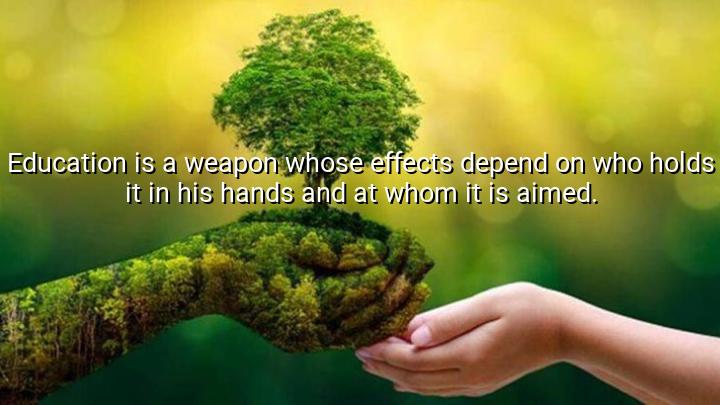




The quote “Education is a weapon whose effects depend on who holds it in his hands and at whom it is aimed.” by Joseph Stalin highlights the power and responsibility inherent in education. Stalin, the leader of the Soviet Union, often viewed societal tools—including education—as instruments of influence and control. This quote emphasizes that education itself is neutral, but its impact is determined by those who wield it and the intentions behind its application.
By comparing education to a weapon, Stalin underscores its potential to shape minds, influence society, and direct ideologies. If used wisely and ethically, education can enlighten, empower, and foster progress. Conversely, if wielded with ulterior motives or oppressive intent, it can manipulate, control, or suppress populations. The quote reflects a recognition of the strategic importance of knowledge in societal and political power structures.
The origin of this statement aligns with Stalin’s broader worldview, where he saw education and propaganda as tools for achieving political objectives. In the context of the Soviet Union, education was not merely about personal development; it was also about cultivating loyalty, ideology, and social cohesion, demonstrating that who controls knowledge significantly affects its societal consequences.
Ultimately, this quote serves as a cautionary reminder of the dual-edged nature of education. It stresses that while education has the power to transform and uplift, its effects are shaped by the motives of those who impart it and the direction in which it is applied, making responsibility and ethical guidance essential in teaching and learning.

AAdministratorAdministrator
Welcome, honored guests. Please leave a comment, we will respond soon