

Easter is not limited to the passion and death of Christ; it also includes the dismal tragedy of life unlived by the many, and all the loss of passion and truth that goes with it.
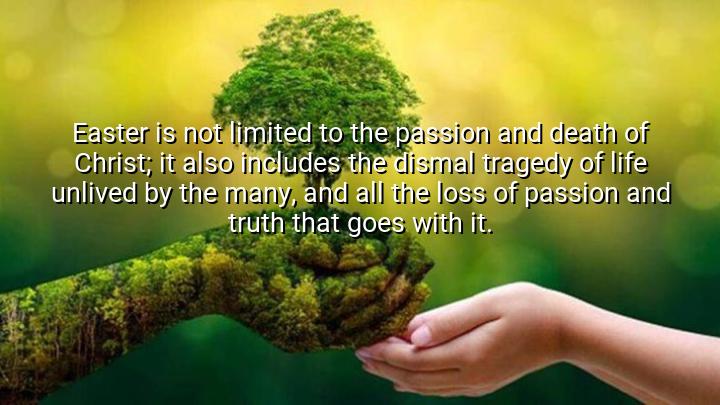




The quote "Easter is not limited to the passion and death of Christ; it also includes the dismal tragedy of life unlived by the many, and all the loss of passion and truth that goes with it" by Michael Leunig expands the traditional understanding of Easter beyond the Christian narrative of Christ's sacrifice and resurrection. Leunig suggests that Easter, as a celebration of life and renewal, should also reflect on the broader societal issues of unfulfilled lives—those where individuals fail to live with true purpose, passion, and authenticity. In this view, Easter becomes a reminder not just of Christ's suffering and resurrection, but of the many people who live without experiencing the fullness of life.
Leunig’s words highlight the contrast between the spiritual and the mundane aspects of existence. While Easter traditionally commemorates the victory of life over death, Leunig also draws attention to the tragic reality of individuals who live their lives without fully embracing the truth of their existence or the passion that should fuel it. This reflection on unlived lives suggests that many people remain disconnected from their true selves and the deeper meaning of life, leading to a sense of loss and emptiness.
The origin of this quote can be tied to Leunig’s broader work, which often explores existential themes of humanity, suffering, and connection. Known for his thoughtful and often humorous reflections on life, Leunig addresses the human condition with a mix of seriousness and tenderness. In this quote, he challenges the traditional, narrowly focused view of Easter and calls for a deeper contemplation of how people engage with the world around them.
Ultimately, Leunig’s quote is a call to examine the quality of life we lead and to recognize that Easter should be a time not only of celebrating renewal and resurrection but also of reflecting on how we live our lives. It asks us to consider whether we are living fully, with passion, purpose, and truth, or whether we are among the many who miss out on the richness of life due to fear, complacency, or disconnection.

AAdministratorAdministrator
Welcome, honored guests. Please leave a comment, we will respond soon