

Early childhood education is an urgent educational, economic and moral imperative. Without it, we face a long-term national economic security crisis.
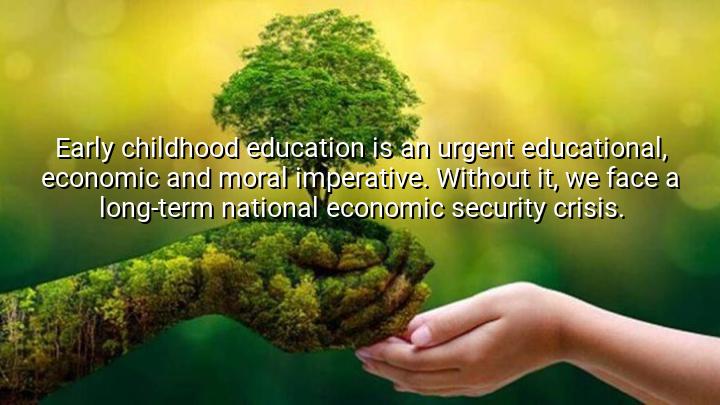




The quote by J. B. Pritzker, “Early childhood education is an urgent educational, economic, and **moral imperative. Without it, we face a long-term national economic security crisis”, highlights the critical importance of investing in learning during a child’s earliest years. By calling it an imperative, Pritzker underscores that early childhood education is not optional—it is a necessary foundation for individual development and collective progress.
The origin of this statement comes from Pritzker’s long-standing advocacy for education reform and early learning programs. As a philanthropist and later as Governor of Illinois, he consistently pushed for expanded access to preschool and child development initiatives, recognizing that the earliest years of life shape cognitive, emotional, and social growth. His viewpoint is influenced by research showing that quality early education leads to better academic outcomes, higher earnings, and reduced social inequality.
By framing early childhood education as both an economic and moral issue, Pritzker connects personal opportunity with national well-being. Without strong early learning systems, children are more likely to struggle later in school and work, which weakens the workforce and creates long-term costs for society. This neglect, he warns, could escalate into a broader economic security crisis, where the nation’s competitiveness and stability are at risk.
Ultimately, the quote reflects Pritzker’s belief that investing in early education is not just about helping children—it is about safeguarding the future of a nation. By treating it as an urgent priority, he emphasizes that the benefits extend beyond classrooms to the economy, social equity, and the moral responsibility of ensuring every child has the chance to succeed.

AAdministratorAdministrator
Welcome, honored guests. Please leave a comment, we will respond soon