

Each day is a little life: every waking and rising a little birth, every fresh morning a little youth, every going to rest and sleep a little death.
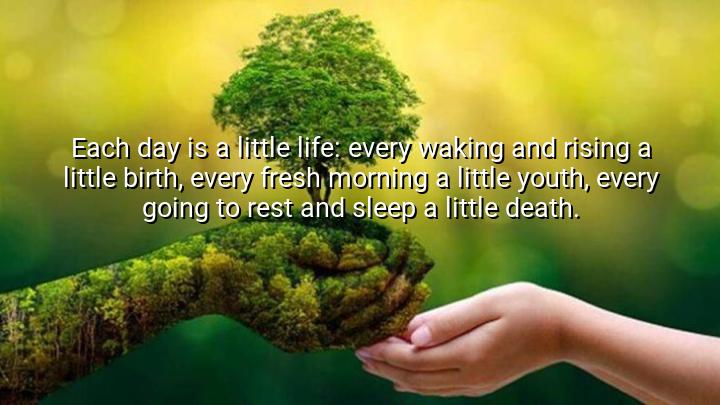




Arthur Schopenhauer’s quote, "Each day is a little life: every waking and rising a little birth, every fresh morning a little youth, every going to rest and sleep a little death," captures the philosophical idea of life's cyclical nature and the constant renewal of existence. Schopenhauer compares the daily cycle to the larger cycle of life, suggesting that each day mirrors the stages of life itself. From waking up each morning, which symbolizes birth and the beginning of a new day, to going to sleep at night, representing death and the end of the day, he emphasizes that life is full of renewal and closure in smaller, more manageable forms.
The quote also speaks to Schopenhauer's view on impermanence and the constant flux of existence. Just as a human life is made up of different stages—birth, youth, aging, and death—each day follows a similar pattern of change and transition. The imagery of "a little death" when going to sleep underscores the idea that rest is a temporary end, only to be followed by the rebirth of the next day. This mirrors the idea that life itself is constantly moving forward, even when we are unaware or dormant during sleep.
Furthermore, Schopenhauer’s words suggest that by recognizing the cycles within each day, we can better understand the transitory nature of our existence. Every day, we experience both life and death, albeit in smaller, more immediate forms, which encourages us to live each day fully, appreciating its fleeting nature. This daily rhythm of beginnings and endings serves as a reminder to embrace both the joy and the sorrow inherent in every moment.
The origin of this quote comes from Arthur Schopenhauer, a German philosopher known for his pessimistic philosophy and his ideas about the human experience, suffering, and the will. His work often focused on the transient nature of existence, the inevitability of suffering, and the importance of accepting life’s limitations. In this quote, Schopenhauer’s reflection on the daily cycle serves as both a philosophical observation and a meditation on how we can approach life and its inevitable endings with acceptance and awareness.

AAdministratorAdministrator
Welcome, honored guests. Please leave a comment, we will respond soon