

Death never takes the wise man by surprise, he is always ready to go.
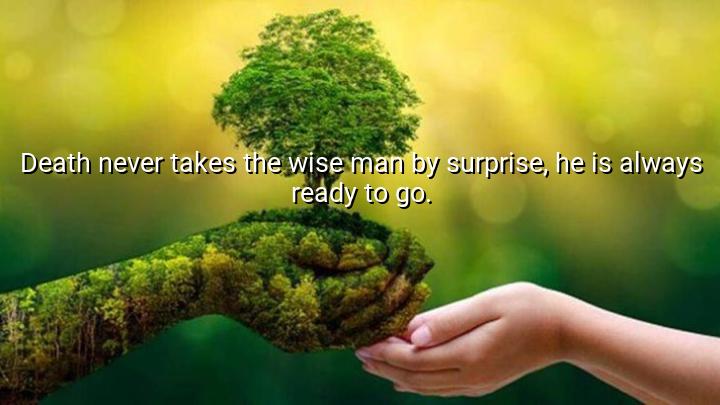




The quote "Death never takes the wise man by surprise, he is always ready to go" by Jean de La Fontaine, a French fable writer, suggests that the wise person has an acceptance and understanding of mortality. La Fontaine implies that a wise individual does not fear death or shy away from it but rather faces it with preparation and acceptance. This contrasts with those who live in fear or denial of death, and who may be caught off guard by its arrival. The wise person, on the other hand, understands that death is inevitable and, therefore, lives with a sense of readiness and peace about it.
La Fontaine’s perspective aligns with a philosophical viewpoint found in many schools of thought, particularly in Stoicism, which teaches that one should accept the inevitability of death and live a virtuous life without the fear of the end. To be wise means to understand that life is finite and that one should not resist its natural course. The wise man is portrayed as someone who lives fully but is unafraid of death, seeing it as a natural and essential part of life’s cycle.
The origin of this quote comes from La Fontaine's fables, which often featured animals and humans embodying various virtues or flaws. These short stories were designed to impart moral lessons through clever allegory. In this case, La Fontaine uses the idea of wisdom and death to teach that the wise person is prepared for all aspects of existence, including its inevitable end, in a way that the foolish are not.
Ultimately, this quote emphasizes the importance of living a life in which death is not feared, but rather embraced as a natural part of existence. La Fontaine encourages readers to live with awareness and acceptance of the inevitable, finding peace in the face of mortality. The wise man is not surprised by death because he is in harmony with the truth of life’s transient nature.

AAdministratorAdministrator
Welcome, honored guests. Please leave a comment, we will respond soon