

Death is the wish of some, the relief of many, and the end of all.
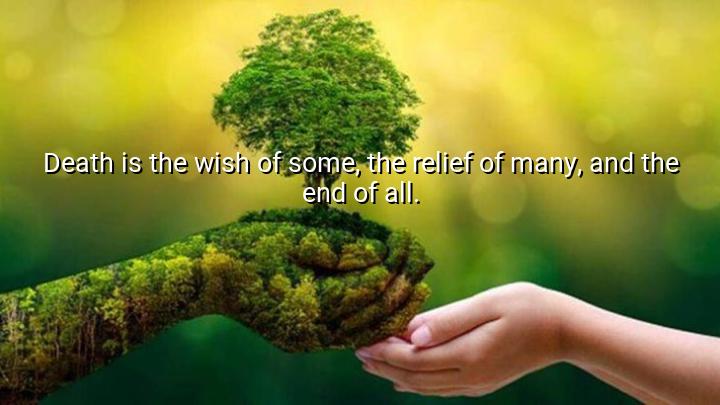




The quote, "Death is the wish of some, the relief of many, and the end of all," is attributed to Lucius Annaeus Seneca, a Roman philosopher, statesman, and playwright known for his writings on Stoicism. In this statement, Seneca reflects on the complex nature of death and its different meanings for individuals based on their circumstances. For some, death may be a desired escape, a way to end suffering or life’s struggles. For others, it represents a form of relief, especially when facing pain or hardship. However, for all, it marks the end of existence, the finality of life itself.
Seneca’s words explore the emotional and philosophical responses to death. He suggests that while some may welcome death as a solution to their problems or as an end to prolonged suffering, many others may experience it as a necessary relief from life’s burdens. This perspective aligns with Stoic thought, which emphasizes accepting life’s challenges while also understanding the inevitability of death. Seneca encourages individuals to focus on living virtuously, knowing that death is a natural and inescapable part of existence.
The origin of the quote comes from Seneca’s philosophical teachings, particularly his writings on morality, ethics, and the human condition. He believed that death should not be feared but accepted as a natural part of life, and that one should live in a way that reflects virtue and reason. His reflections on death often explored how people react to their own mortality and how they should face the end of life with dignity and courage.
Ultimately, Seneca’s quote invites contemplation about the role of death in our lives. It challenges us to consider how we view mortality—not just as an end but as something that shapes our understanding of life, suffering, and relief. It reminds us that death is not a singular experience but one that is interpreted differently based on our personal circumstances and perspectives.

AAdministratorAdministrator
Welcome, honored guests. Please leave a comment, we will respond soon