

Death is the sound of distant thunder at a picnic.
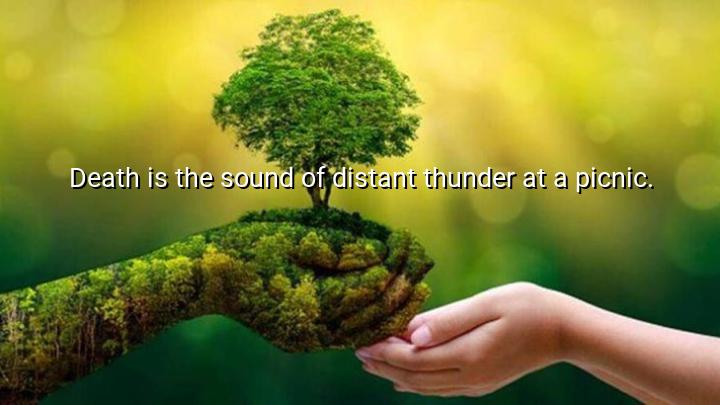




W. H. Auden’s quote, "Death is the sound of distant thunder at a picnic," presents a powerful metaphor about the nature of death in relation to human life. The distant thunder suggests that while death is always present, it often feels far off or removed from the immediate concerns of everyday living. The picnic, a symbol of enjoyment and leisure, represents life's more peaceful and joyful moments. This contrast underscores how death can seem like a distant, inevitable event that remains out of focus until it suddenly arrives.
The metaphor also highlights how death often feels unreal or abstract, like the sound of thunder far in the distance, barely impacting the current moment. While we are immersed in our daily lives, surrounded by pleasure and comfort, we tend to ignore or minimize the inevitability of death. Auden suggests that, much like thunder at a picnic, death can be something we hear in the background but rarely feel the full weight of until it’s near or upon us.
Auden, known for his insightful and often philosophical poetry, had a deep understanding of the human condition and our relationship with mortality. His perspective on death reflects his broader view on the transient nature of life, suggesting that while we may live with a sense of urgency and joy, the reminder of death is always there, lurking in the background.
The origin of this quote lies in Auden's reflections on the impermanence of life and the tension between living fully and acknowledging death. It encapsulates his broader existential concerns about how we live in the face of inevitable mortality and how we tend to push thoughts of death aside as we enjoy the moments of life.

AAdministratorAdministrator
Welcome, honored guests. Please leave a comment, we will respond soon