

Death is staring too long into the burning sun and the relief of entering a cool, dark room.
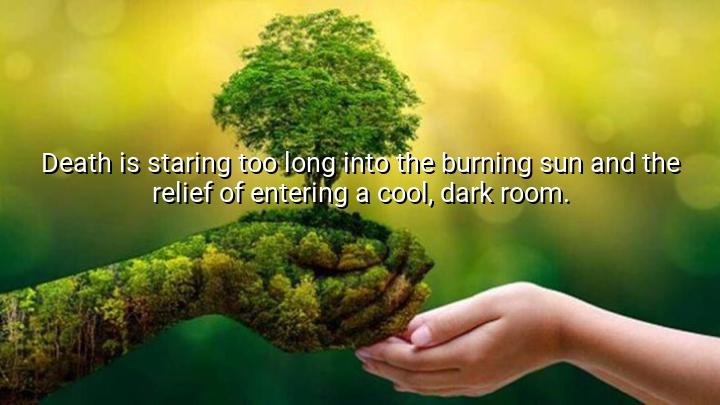




The quote "Death is staring too long into the burning sun and the relief of entering a cool, dark room" by Elisabeth Kübler-Ross uses a vivid metaphor to describe the experience of death. The "burning sun" represents the intense, painful process of life or suffering, while the "cool, dark room" symbolizes the relief and peace that death may bring, offering an escape from that suffering. Kübler-Ross contrasts the harshness of life’s struggles with the comfort of rest, suggesting that death can be a form of relief from the overwhelming burdens of existence.
Kübler-Ross, a pioneering psychiatrist and author known for her work on the stages of grief, often explored the emotional and psychological dimensions of death and dying. In this quote, she reflects the complex nature of death: it is not only an end but also a potential release from physical or emotional pain. The metaphor conveys the idea that while death may feel like a surrender or loss, it can also offer peace and comfort, especially for those suffering from prolonged pain or illness.
The origin of this quote lies in Kübler-Ross's groundbreaking work, particularly her 1969 book On Death and Dying, where she introduced the five stages of grief: denial, anger, bargaining, depression, and acceptance. Her research highlighted how individuals cope with their own death or the death of others. The quote reflects her empathetic understanding of both the struggles of life and the potential peace that can come with death, offering a sense of relief for those facing terminal illness.
Ultimately, Kübler-Ross’s quote underscores the idea that death can be a complex and multi-faceted experience. While it may mark an end, it can also bring a sense of release and respite. By comparing death to the transition from a harsh, painful reality to a peaceful and cool space, she paints a picture of death as both a natural conclusion and a possible form of healing.

AAdministratorAdministrator
Welcome, honored guests. Please leave a comment, we will respond soon