

Death is not extinguishing the light; it is only putting out the lamp because the dawn has come.
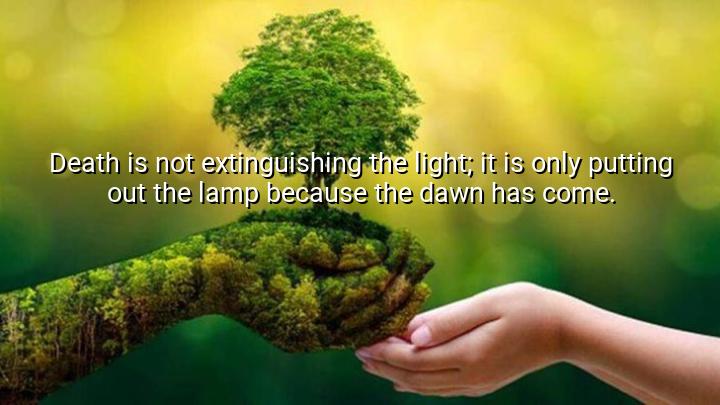




Rabindranath Tagore’s quote, "Death is not extinguishing the light; it is only putting out the lamp because the dawn has come," offers a comforting perspective on mortality. Tagore suggests that death is not the end of life or existence, but rather a transition from one state to another. By comparing death to putting out a lamp, he implies that the light—symbolizing life or spirit—continues even after the physical body ceases to exist. The arrival of dawn represents a new beginning, a higher state of being or awakening, where the soul moves beyond the limitations of the material world.
This metaphorical representation of death provides a sense of peace and continuity, counteracting the common fear of death as the final end. The image of the lamp being put out suggests that while the physical body may be extinguished, the essence of life or spirit lives on. The dawn represents a new form of existence, symbolizing a shift from the earthly realm to a more spiritual or eternal plane, implying that death is a natural and necessary part of the cycle of life.
Tagore’s words offer a spiritual and philosophical view of death, emphasizing the impermanence of the physical world and the transcendence of the soul. By framing death as a transition, he invites individuals to see it not as something to fear, but as a progression towards something greater. The quote encourages a sense of acceptance of mortality, suggesting that the soul’s journey is ongoing and not limited to its earthly form.
The origin of this quote comes from Rabindranath Tagore, a renowned Indian poet, philosopher, and Nobel laureate in Literature. His works often explored themes of life, death, and the eternal. Tagore’s spiritual insights were deeply influenced by Indian philosophy and his belief in the interconnectedness of all life. This quote reflects his humanistic and transcendent view of death, offering solace to those who grapple with the concept of mortality.

AAdministratorAdministrator
Welcome, honored guests. Please leave a comment, we will respond soon